-
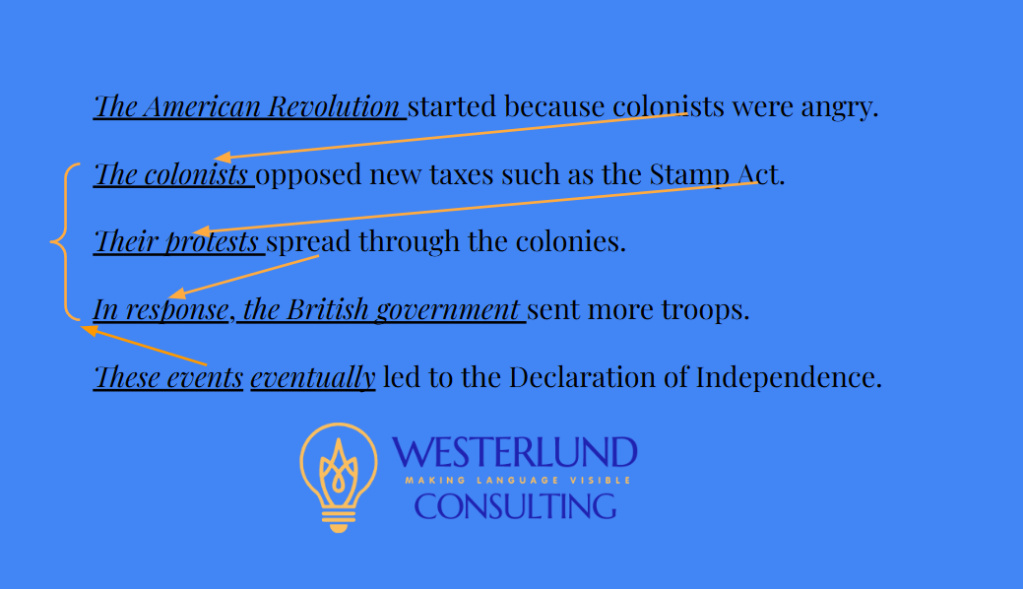
 Continue reading →: How Causality Unfolds Across Historical Texts: The Domino Effect
By Dr. Ruslana Westerlund I have previously written on how causal language is not always expressed through because and so in this blog. Today, I’m going to take you to historical texts to illustrate something that needs to be taught explicit to our students: how cause and effect chains are…
-
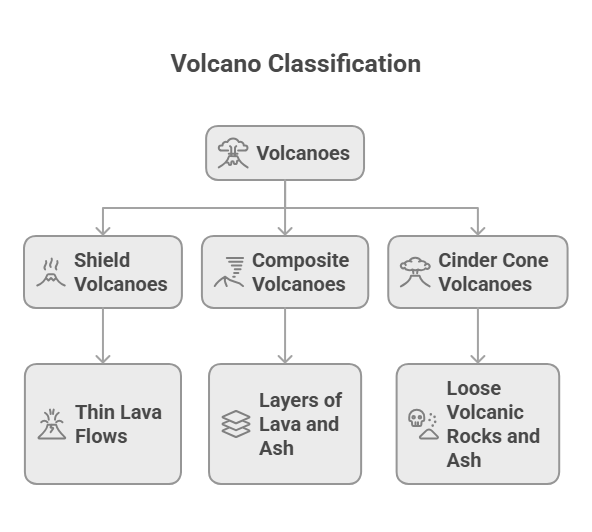 Continue reading →: Demystifying “Informational” Texts
By Dr. Ruslana Westerlund Walk into almost any classroom and you will hear teachers say something like: “Today we’re working on informational writing.” Or, prominent literacy bloggers write about the importance of teaching “text structure”, e.g., informational writing is different from narrative. In this blog, I explore the nuances of…
-
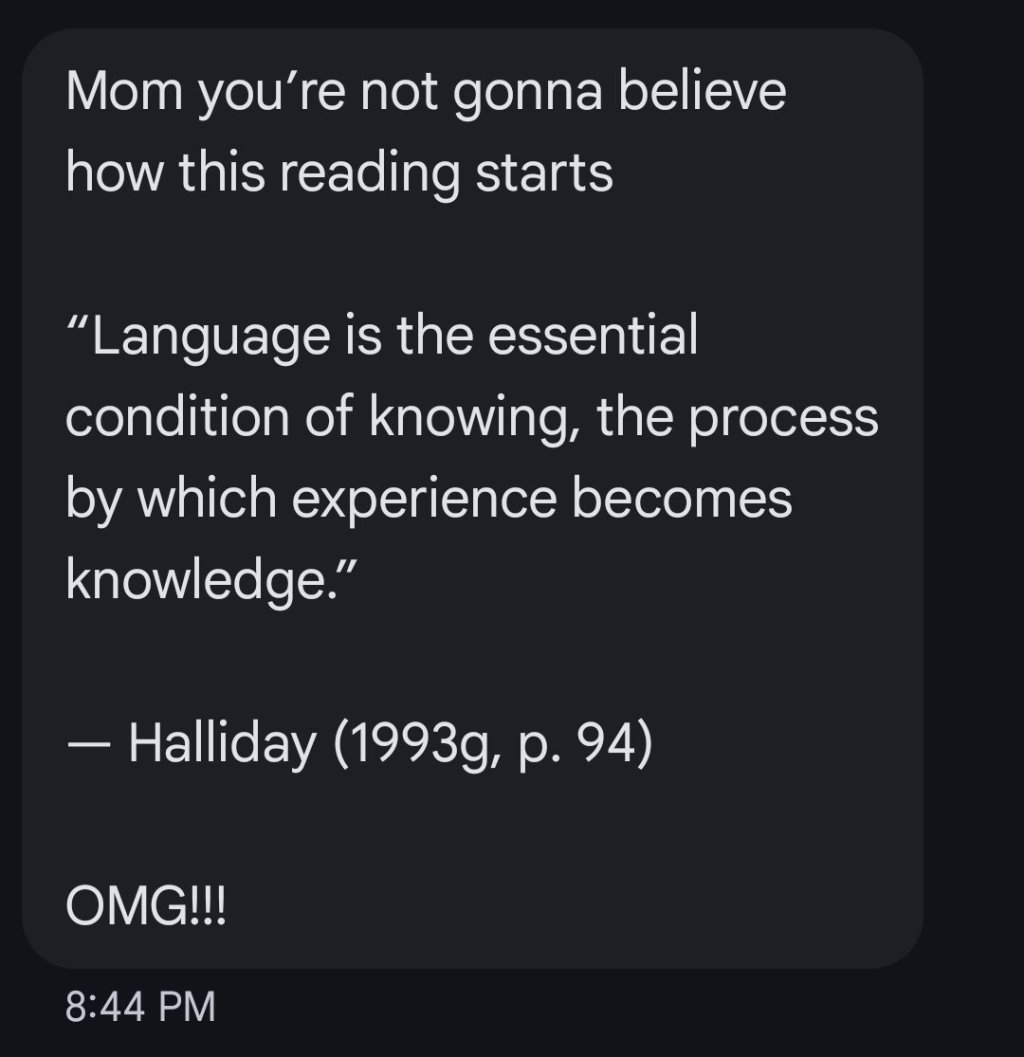 Continue reading →: Language is not a Scaffold
Ever since I read Halliday, I realized how we not only misunderstood but entirely missed the role of language in education. We have reduced language to “language supports” or “language scaffolds”. We have reduced language as a meaning making resource to language as an inventory of structures leading to very…
-
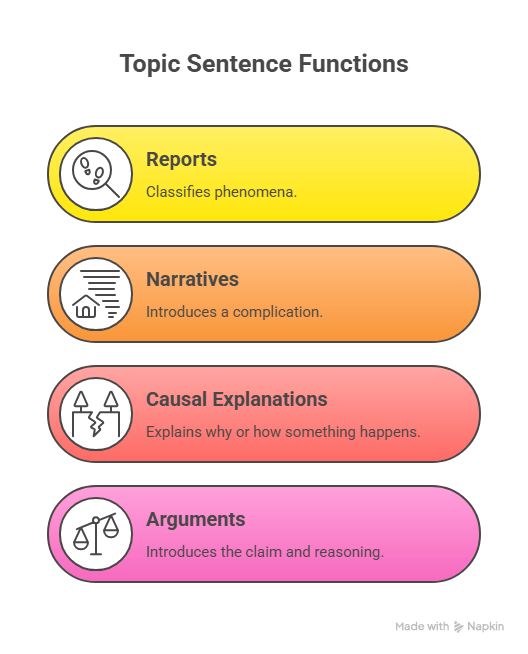 Continue reading →: The Topic Sentence Myth
I recently had a conversation with a teacher about teaching paragraph structure in an argument (persuasive essay). She said, so why can’t we call the first sentence a topic sentence and the final sentence a concluding sentence? That conversation inspired this blog. The answer is simple: the sentences that open…
-
 Continue reading →: Dr. Westerlund’s Blog Organized by Categories
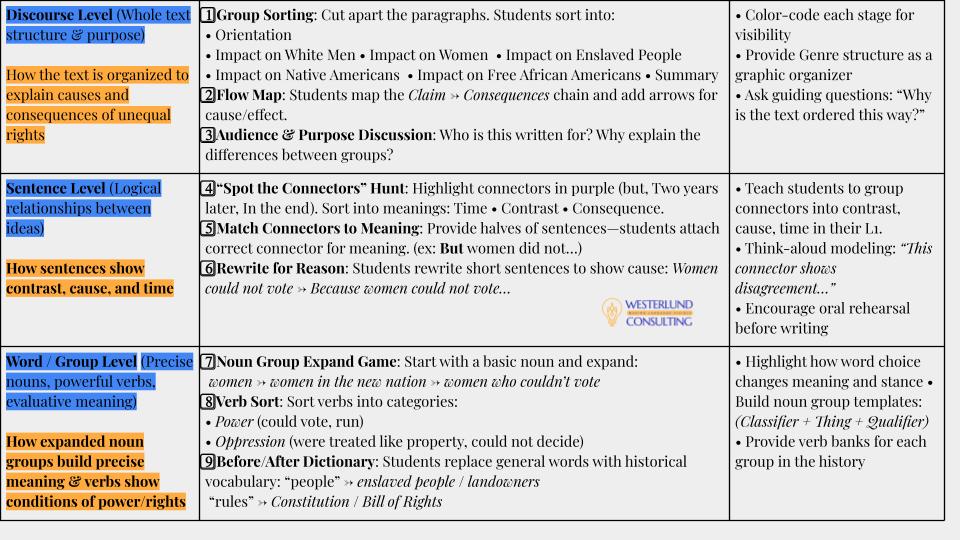
Someone has just reached out and asked me for a progression of learning with a Functional Approach. In response, I have grouped my resources by different language features, starting with noun groups because that seems like an entry point. However, you could start with cohesive devices or causal verbs or…
-
Continue reading →: Turning Language Charts from an Assessment to an Instructional Tool
In this blog, I will illustrate how to turn the WIDA Language Charts from an assessment-oriented tool to an instructional tool. The reason I’m doing it this way is because we shouldn’t be assessing students on things we haven’t taught them like cohesive devices, nominalization, noun groups, etc. So, in…
-
 Continue reading →: English-Ukrainian False Cognates
Коли слова виглядають знайомими, але означають щось зовсім інше «Фальшиві друзі» між англійською та українською мовами Останнім часом я думаю про слова у своїй мові, які називають «фальшивими друзями». Це такі слова, що звучать або виглядають подібно у двох мовах, але означають зовсім різні речі. Наприклад, українське «актуальний» не означає…
-
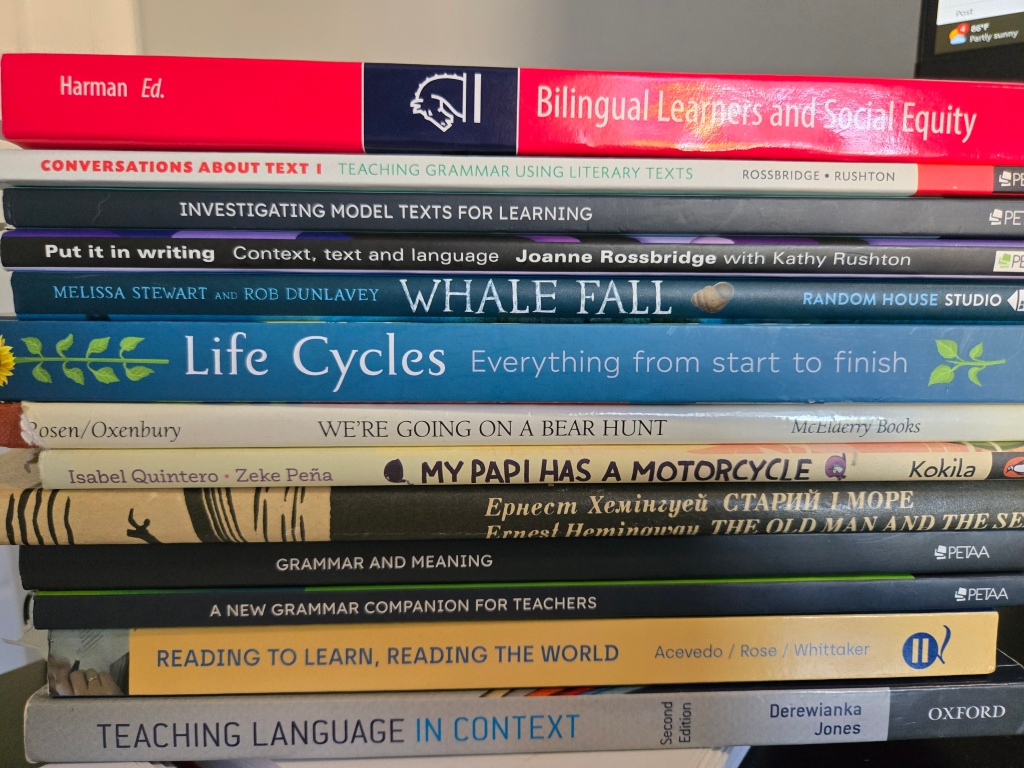 Continue reading →: Misconceptions About Systemic Functional Linguistics
By Dr. Ruslana Westerlund Over the years, as I have been training teachers on using SFL in their work as a toolkit for providing access to K-12 students to disciplinary meanings (it’s not the only concern of SFL to do that, but that’s what I’m asked to train on), I…
Hello,
I’m Ruslana

Welcome to my blog where I share my ruminations on education, equity, language, and language-based pedagogy, namely Systemic Functional Linguistics.
Let’s connect
Join the fun!
Stay updated with our latest tutorials and ideas by joining our newsletter.
 Making Language Visible