
by Ruslana Westerlund
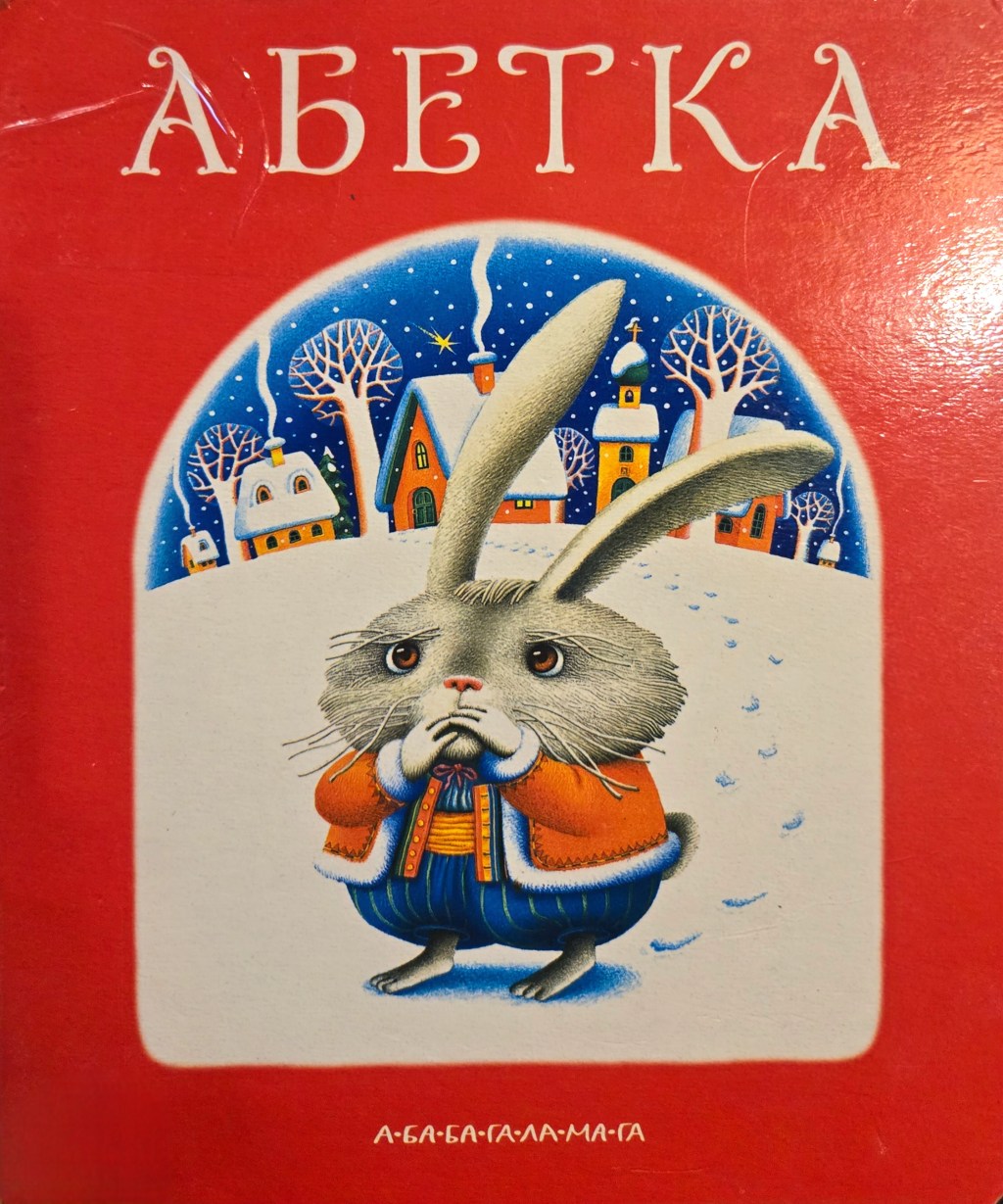
There are many different types of genre in literature that we are familiar with. My favorite is folktales. I think it is because of my rich oral tradition I grew up with. My grandfather told me many stories from different cultures. One of my favorite stories was – what I later discovered – Aesop’s fable. It was about the stork and the fox. When the stork invited the fox over for dinner, he served her food in a tall skinny jar because of his long beak. The fox couldn’t get the food out because the fox didn’t have a beak. Then when the fox invited the stork for dinner, the fox served the stork food spread out on a flat plate. The stork pecked at the food and didn’t get fed.

The moral of the story was – according to my grandfather – if you want to show hospitality, you should accommodate to the guests, think of what they like and don’t be self-absorbed and unaware of other people’s needs. There may be another moral to this story, such as One Bad Turn Deserves Another. I had many more stories that I could retell. But the point is not sharing my Ukrainian folklore with you – even though it is tempting and I might come back to it later, – but to examine culturally-specific ways of using language for a particular purpose. Language of Ukrainian storytelling is different from other cultures, not just in content, but in language choices which match the culture and the genre. The culturally accepted and predictable ways of using language for a particular purpose is called the sociocultural context. I like how the Australian ESL curriculum explains the sociocultural context.
Each culture develops, over time, certain accepted ways of using language to achieve particular purposes. These accepted and predictable ways are known as genres.
There are as many genres as there are social activities recognizable by the members of the cultural group. For example, when you order coffee at Starbucks, you enter into a culture of coffee ordering which has its own set of language choices one needs to be aware of to order the right type of coffee. The genre is ordering coffee at Starbucks. Not just at any coffee shop, but Starbucks. You will need to know what Tall, Venti, Grande, etc mean in terms of the size of the cup. I still resort to using the word “medium” because I can’t remember which one is medium Grande or Venti.  If you don’t know what those mean, you’ll end up literally paying for it. The use of Italian in Starbucks sets up the aura of upper middle class, fancy coffee shop and not just any “hole-in-the-wall” coffee shop. The ordinary folks are excluded in those coffee shops not just because the prices are prohibitive but because of the affluent aura that is exhumed from the menu and communicated in various subtle ways. If you can afford one, you need to know the difference between an Americano, Espresso, Capucchino, Caramel Macchiato, Mocha, Frapppuccino. Thank goodness, Tea is Tea, but wait, there is Chai Tea which is a tautology because it literally means Tea Tea, but not in the US. Chai Tea is … tea with spices and milk (apologies for any inaccuracies).
The fact that genres are assumed, expected ways of interacting in a coffee shop, is a significant challenge to people who don’t speak Starbucks. Let’s go back to the definition of genre: accepted and predictable ways of using language for a particular purpose.
What are the accepted and predictable ways of ordering at Starbucks? Accepted by whom? What if they are not accepted by me? Well, then I sound odd, impolite, or too polite and just “weird”. Whenever I order, I have the confluence of not being a native English speaker – which always causes in a reaction in a white suburban Madison coffee shop due to my slight Slavic accent, – not being a fluent Starbucks speaker, and being from a different culture which has a different way of making requests. I have to always make sure I put the words in the right order and pronounce the words clearly, use the right prosody (intonation and stress not only of individual words, but of the whole string of words). Whenever I place my order and put words in the wrong order, the barista will recast what I said but in the right way. For example, I’ll say skinny soy tall latte and he will recast as Okay, tall soy latte. There is no skinny version of soy. Then I stand there and wonder if I should change my mind, which I often do and I end up getting dark roast medium coffee, black, no cream. The Starbucks culture determined a certain acceptable way of ordering coffee. There are variations from one context to the next, but in general, we don’t go up to order and say, Do you mind making me a latte? Would be so kind as to make me a latte? or Get me a latte or I want a latte. We usually say something like
Me: I’d like a dark roast medium coffee, please.
Barista: Would you like some room for cream?
Me: No, just black. Thank you.
The predictable ways of ordering coffee can only be predicted by those who have experience with that genre. It’s not just knowing the difference between Venti or Grande, Capucchino or Macchiato, but the culture of affluence which – many of us feel we need to know how to navigate once entering Starbucks. You have to know how to say what you want to say, in what order, making eye contact while you are reading the menu. There is also the culture of “you are special”, you can order a drink that is unique to your taste buds! Just like the barista says in this video in his response to the question from a customer: Why are there so many choices at Starbucks? – It’s so that you feel special here. You can order your own drink! But later he admits the truth that it’s the illusion of choice. Why is it the illusion of choice? Check out this interaction between a barista and a customer in this video.
Now think about your English language learners and the school genres! The fact that genres are assumed, expected ways of interacting is significant for English Language Learners, whose cultures often do not share the assumptions and expectations of English-speaking cultures. Part of a learner’s language development is building the knowledge—linguistic and cultural—that enables them to make competent choices in the various genres. Some learners may have already developed partial or full understanding of the genres of their first language and are now learning the educational genres prevalent in schools. Describing language use in terms of language choices gives agency to the learner because it is the learner that makes those deliberate choices to achieve a particular purpose.
How are you teaching your learners the sociocultural context? Are they learning how to make appropriate linguistic choices to achieve their purpose of communication effectively? If they do, they are using metalinguistic and metacultural skills, I would add, they are developing meta-sociocultural skills.
My next blog will be dedicated to the linguistic choices particular to specific genres. Stay tuned!
To read more how restaurant menus make specific language choices to sell the food to you, check out this article.
References:
Christie, F., & Derewianka, B. (2008) School discourse. New York, NY: Continuum International Publishing Group.


 Making Language Visible
Leave a comment