2024 was the year of blogging. All these blogs were inspired by you, my teacher friends who requested simple and actionable illustrations of the Language Functions and Features in the WIDA 2020 Standards. Below I highlight a few of your favorite blogs.
An Invitation to Reconsider Comprehensible Input
My first blog of 2024 was An Invitation to Reconsider Comprehensible Input has been one of the most popular blogs and generated a great discussion on social media. Capitalizing on the popularity of the topic, I developed it into a full-blown keynote I delivered at the Carolina TESOL Conference in Myrtle Beach.
Making Language Visible in Social Studies
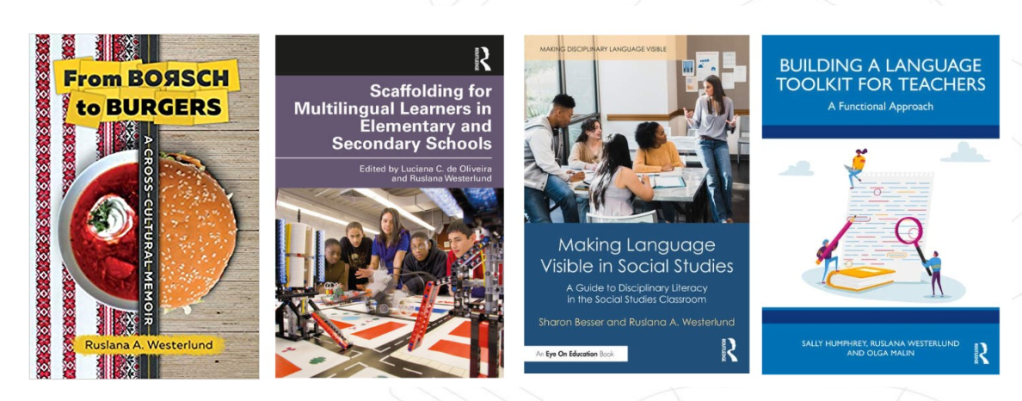
In 2024 my co-author Sharon Besser and I published our book Making Language Visible in Social Studies where we illustrated two important social studies genre families: explanations and arguments. It’s been used by several teacher groups as a book study for whom I created videos to highlight the key ideas in each chapter. This blog includes my video narration of chapter 2.
How to Create Content-Language Objectives Using the WIDA Language Functions and Features
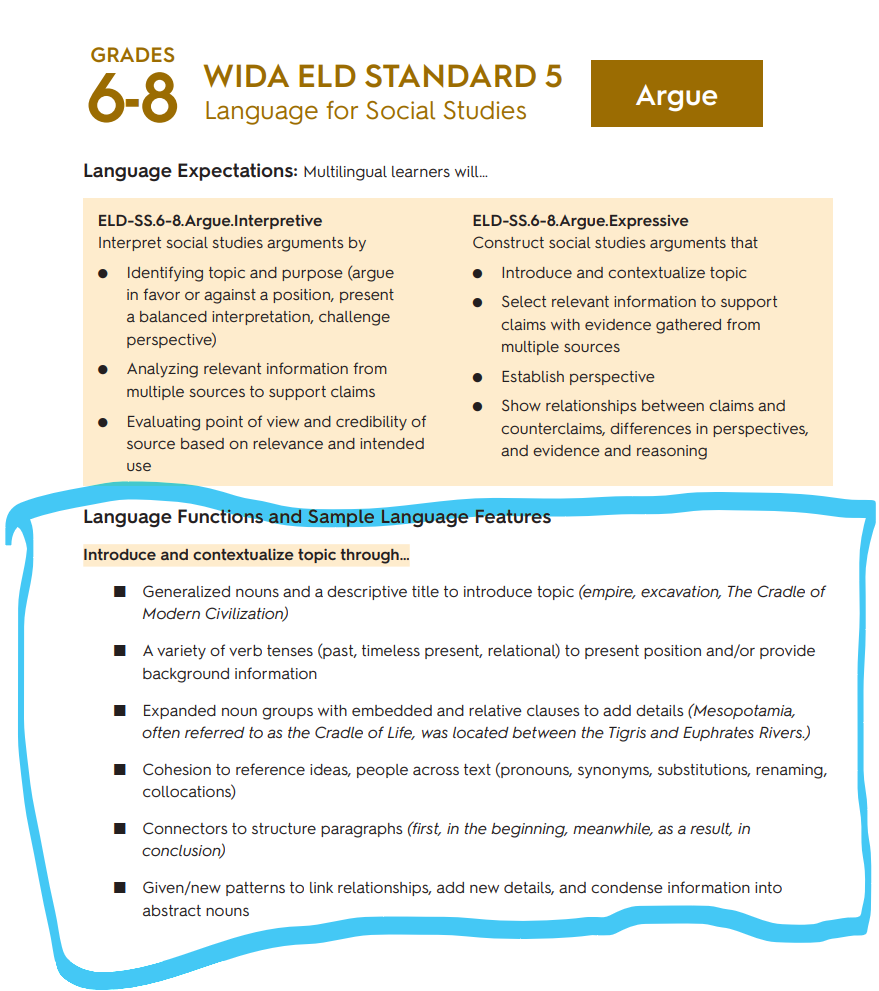
Many of you loved the simplicity of the approach to Create Language Objectives Using the WIDA Language Functions and Features. This blog includes several language functions and language features from WIDA 2020 with a simple approach to turn them into a unit or lesson level set of language goals.
Cohesion: the Glue that Holds the Text Together
The blog Cohesion: the Glue that Holds the Text Together was eye-opening to those of you who found that cohesion is not some abstract nebulous thing but represented through concrete grammatical resources as outlined in the blog with examples of a teacher and a student checklist.
The Genres of Aurora Borealis
While everyone was staring at the sky admiring the Aurora Borealis, I was analyzing the language involved in describing and explaining the phenomenon in my October 11 blog “The Genres of Aurora Borealis.” I took this opportunity to broaden the notion of genre and showed how differences in genres are realized through their language features and genre stages. I clarified the distinction between formats (e.g., blogs, letters) and genres (e.g., explanations, descriptions, recounts, etc), highlighting the importance of explicit instruction of language specific to the genre.
Moving Beyond Because and So: Language of Causality
In my October 31 blog post, “Moving Beyond Because and So: The Language of Causality,” I delved into the importance of teaching students a wide range of grammatical resources that express causality—going beyond simple connectors like “because” and “so” but also causal verbs (e.g., “contribute,” “initiates”), nouns (e.g., “reduction,” “breakdown”), and clauses (e.g., “as days become shorter and temperatures drop”) that help convey causality in complex sentences.
Teaching Students Definitions of Vocab in Text
This blog challenged scaffolding as help and showed different ways of how to provide scaffolding that leads to autonomy by teaching students how to find definitions embedded in texts.
I. Will. Persist.
Following the results of the election, I sat down and wrote this blog to help myself find a productive way to deal with the news. That’s how I’m entering 2025: with the same resolve to continue to do good, to stay in community, and to love radically.
At your service,
Ruslana

 Making Language Visible
Leave a comment