What I’m about to teach you I learned from Sally Humphrey. I had an opportunity to travel to Sydney in 2016 or 2018, and I’ll never forget our chat in a corner coffee shop where she taught me how to make a complication more complicated (more interesting) by adding phases (or genre moves) simply called Actions, Reactions, Interactions, and Descriptions to recounts or other narratives. She published this approach in her book Adolescent Literacies in the Middle Years by Routledge in 2017. First, definitions:
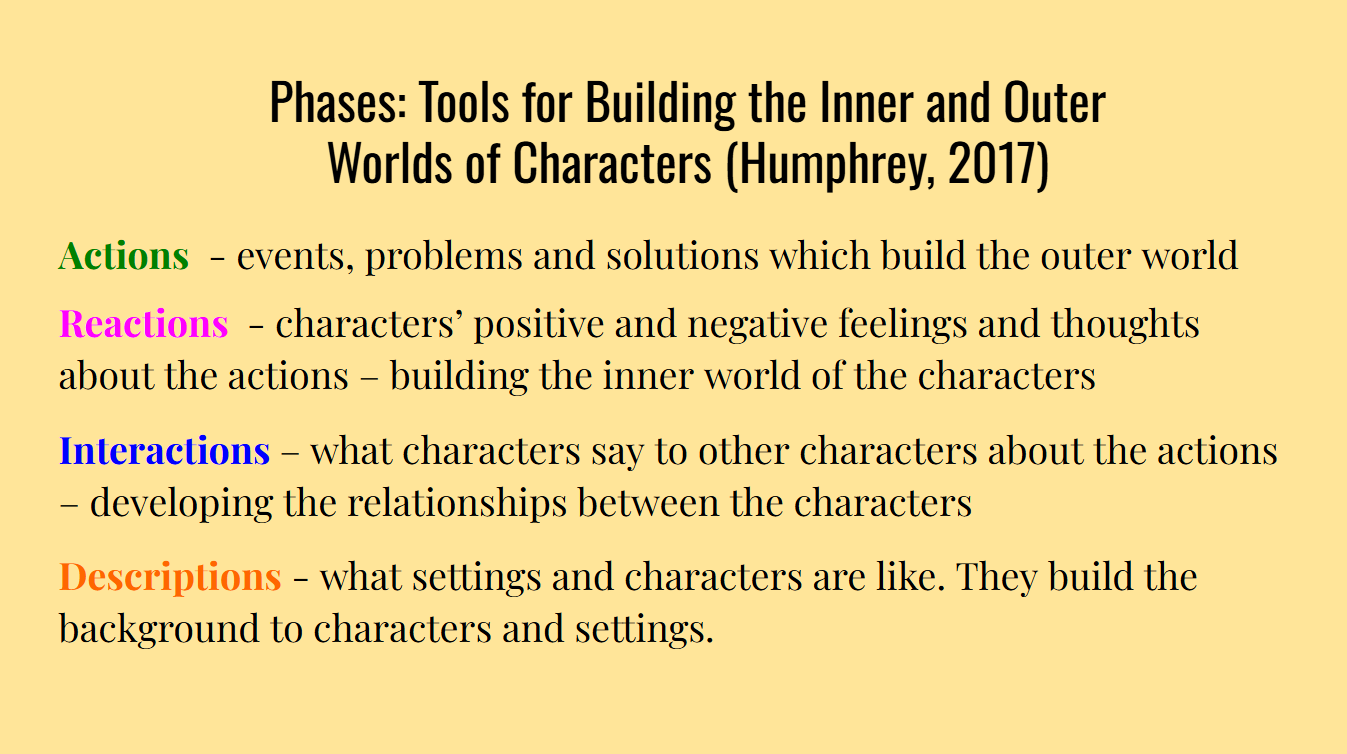
Actions – events, problems and solutions which build the outer world
Reactions – characters’ positive and negative feelings and thoughts about the actions – building the inner world of the characters
Interactions – what characters say to other characters about the actions – developing the relationships between the characters
Descriptions – what settings and characters are like. They build the background to characters and settings.
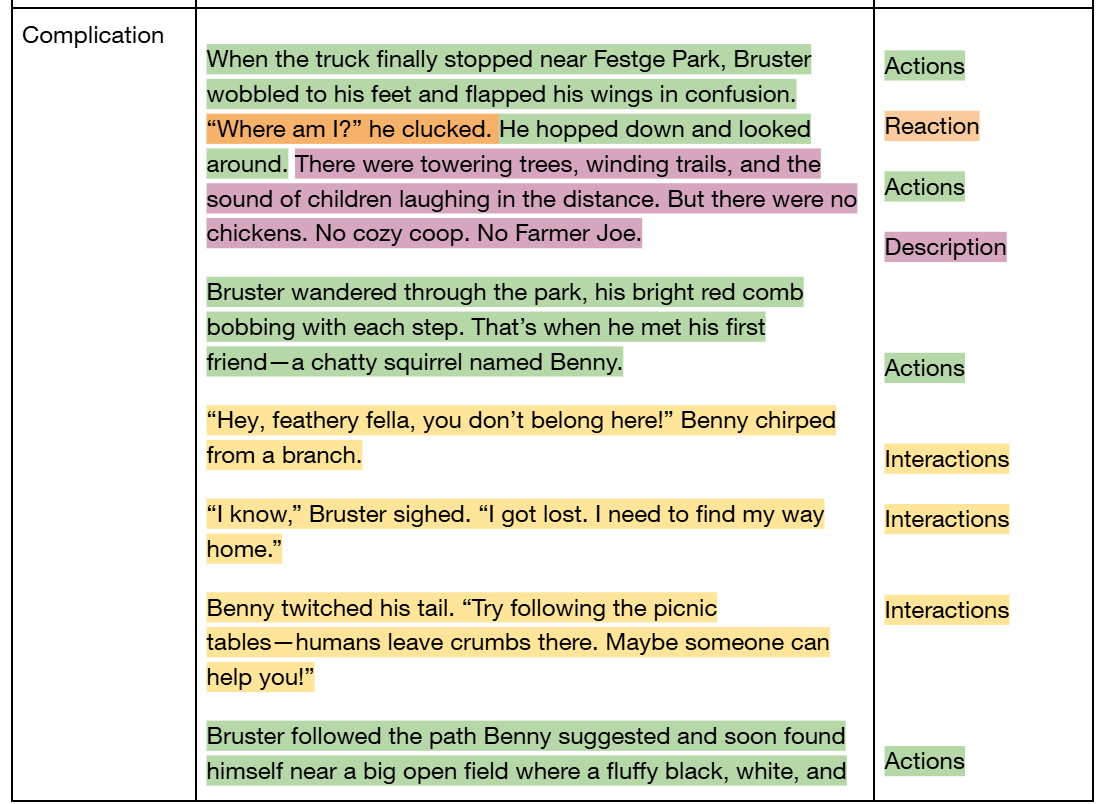
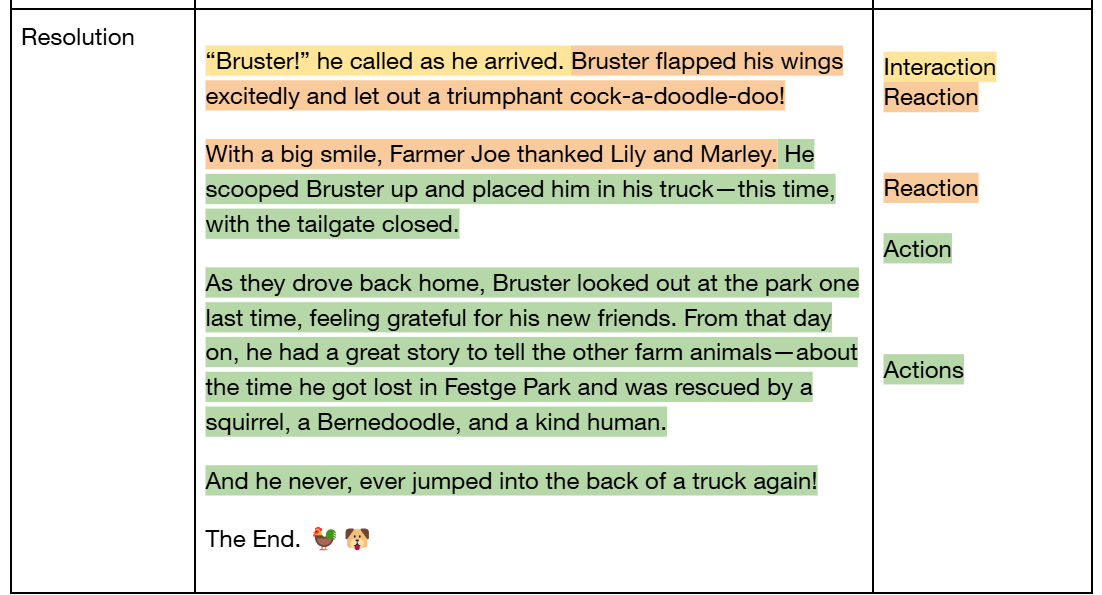
The reason for adding ARID phases, is because such large stages as Orientation, Complication, and Resolution are not nuanced enough for children to know what exactly is a complication. What makes a complication complicating? Most children end up writing stories full of actions. So, start with their uncoached writing full of actions and teach them how to add Reactions, Interactions, and Descriptions. When teaching interactions, teach them how to diversify saying verbs like I described here.
Because I lose color coding when I copy and paste from Google Docs, I had to screen shot and upload section by section my color coded text below.
I used a real life experience of going to a local park nearby with my dog Marley where we met Bruster the Rooster. I engineered a prompt with the details I wanted to be included and Chat GPT generated this story for me. I added my own analysis of the ARID phases and color coding. A picture below the text is of the actual rooster who got rescued by my friend Carolyn.



If you want to download an entire unit on adding ARID into children’s narratives, including authentic mentor texts from please email me at westerlundruslana@gmail.com
P.S. This blog is dedicated to fourth graders at Park Elementary in Cross Plains, Wisconsin.


 Making Language Visible
Leave a comment