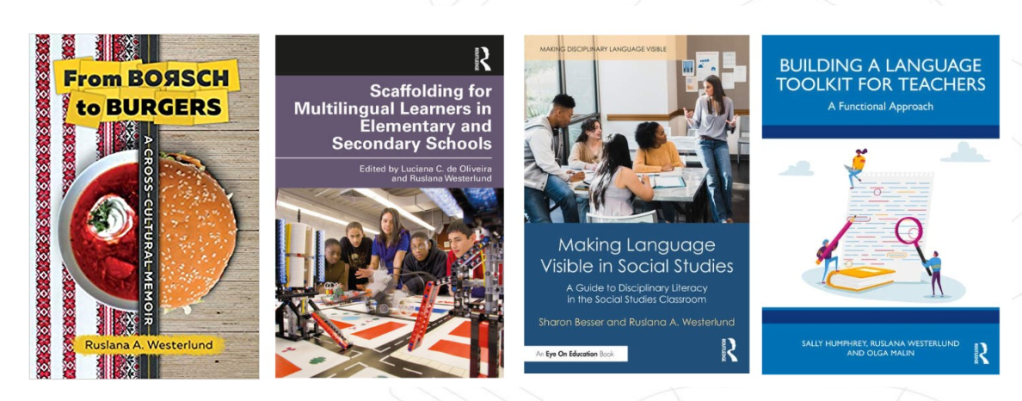
When I was writing my memoir “From Borsch to Burgers: A Cross-Cultural Memoir”, I used Ukrainian words intentionally and purposefully. It was a strategy I used to connect with the words of my childhood. My childhood did not happen in English. It happened in Ukrainian. Therefore, the book, though written in English, had to reconstruct my childhood in the way it was. Several teachers used my memoir to study the use of translanguaging in the context of writing memoirs, a very special type of narrative.
Translanguaging—the practice of using multiple languages flexibly within communication—can be a powerful tool in classrooms, but it must be used strategically. Instead of randomly inserting familiar words, teachers should bring in authentic literature with translanguaging to teach students how to intentionally integrate cultural terms in narratives to enhance meaning-making, and teach students that we don’t translate words, we bring in our cultural worlds into our writing.
“We don’t translate words, we bring in our cultural worlds into our writing.”
Ruslana Westerlund
Below, we explore how to use translanguaging strategically through narrative writing.
Strategic Translanguaging in Narratives: Bringing Culture to Life
Narratives are rich spaces for translanguaging because storytelling is deeply tied to culture. Using culturally specific words—not just direct translations—makes stories feel authentic while also expanding cultural knowledge for all students. Let’s take a look at an example below.
The Secret of the Vyshyvanka
Olenka stood in front of the mirror, smoothing out her вишиванка (vyshyvanka)—a beautiful white blouse with red and black embroidery. Today was a special day at school: National Vyshyvanka Day!
“You look wonderful, Olenko!” her бабуся (grandmother) said, fastening a small оберіг (protective charm) onto the collar. “Do you know what this pattern means?”
Olenka traced the embroidered flowers on her sleeve. “I think so, бабусю. The red symbolizes love and life, and the black represents the sorrow. “Червоне то любов, а чорне то журба”. She quoted a famous line in Ukrainian.
Her grandmother nodded. “Так! (Yes!) And these golden patterns here—пшениця (pshenytsia) and колосок (kolosok)—they represent the rich wheat fields of Ukraine, the land that has always nourished us.”
At school, Olenka’s friends admired her shirt. “That’s so cool!” Jake said. “My family has special clothing for holidays too.”
Olenka smiled, proud to share her heritage. “It’s not just a shirt,” she explained. “It’s a story, sewn with love.”

How was Translanguaging Used in the Story?
- Use cultural objects (e.g., вишиванка (vyshyvanka), пшениця (pshenytsia), колосок (kolosok)) to add depth and meaning to the story.
- Provide context clues so that readers unfamiliar with Ukrainian can understand the meaning of the words (e.g., “Оберіг (oberih) is a small charm believed to protect a person.”).
- Bring authenticity by making the story sound natural and immersive (e.g., using бабуся (babusya) instead of “grandmother” or explaining the symbolism of embroidery patterns).
Narratives feel more authentic, connecting students to their cultural identities.
By thoughtfully incorporating translanguaging in storytelling and content instruction, we empower multilingual learners to leverage their full linguistic repertoire as a strength, not a barrier.
Want to Try This in Your Classroom?
- Model strategic translanguaging—not just in vocabulary but in how ideas are expressed.
- Encourage students to integrate their own cultural words into narratives.
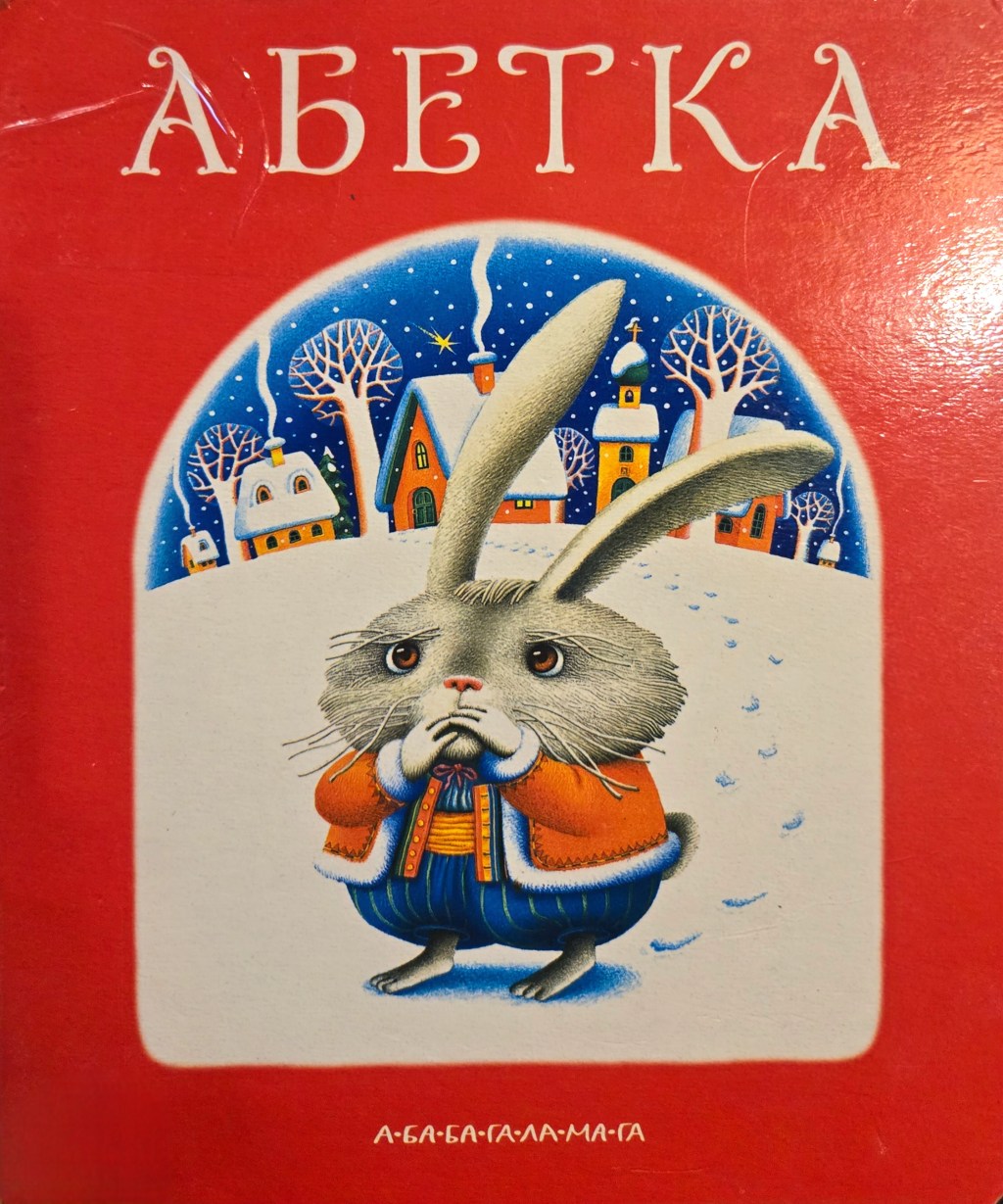
Below is a short list of Bilingual Ukrainian children’s literature in English and Ukrainian.
The Ear of Wheat (Kolosok) https://www.goodreads.com/book/show/35748527-the-ear-of-wheat
Sirko https://www.goodreads.com/book/show/56190875-sirko
The Turnip https://www.goodreads.com/book/show/57142995-the-turnip
The Story of Ukraine: An Anthem of Glory and Freedom https://www.goodreads.com/book/show/63921943-the-story-of-ukraine


 Making Language Visible
Leave a comment