By Dr. Ruslana Westerlund
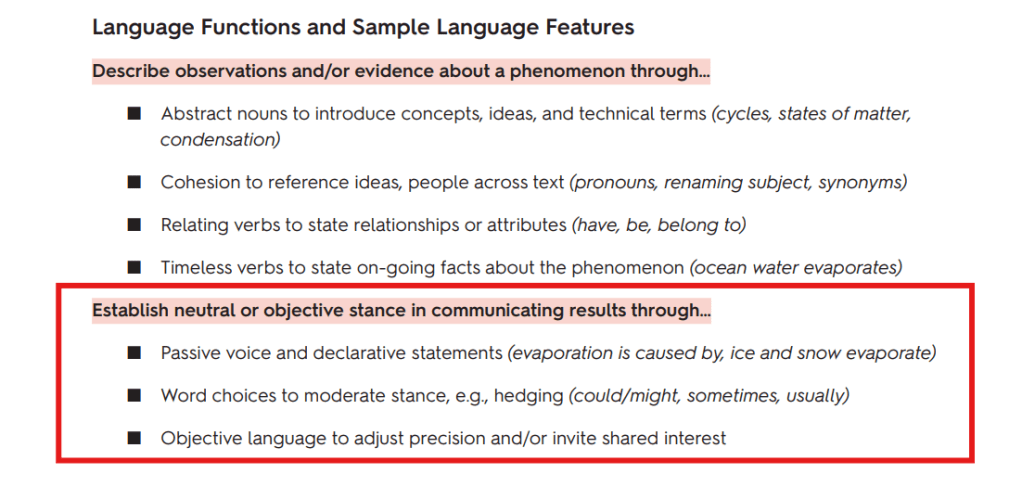
Teachers often ask me questions which language feature to focus on. This question comes from feeling overwhelmed with the student needs and all the options of the language features provided in the WIDA ELD Standards. My response is informed by the following steps:
- What’s the task that you are supporting your EL students?
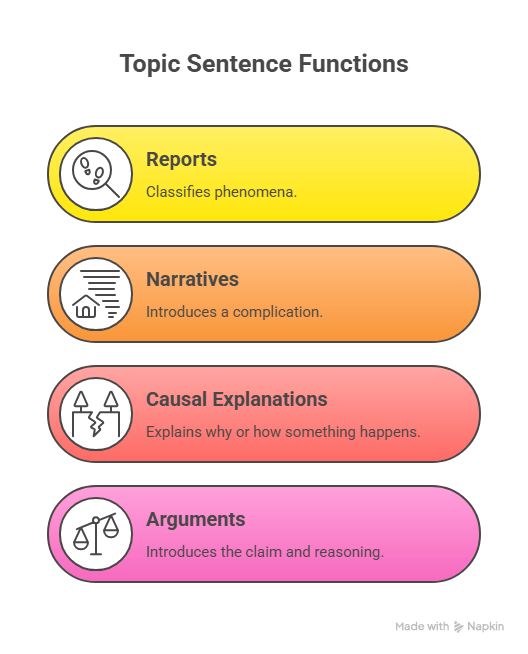
- What is the genre of the task? In the WIDA ELD, genres are grouped into the Key Language Uses: Inform, Narrate, Explain, and Argue.
- What does the final product/text look like? Do you have a model response or a mentor text such as this one: By the way, you don’t need a multiparagraph text to do the language analysis. Focus on 1-2 key paragraphs that are representative of the summative genre. In the example below, the bolded language feature is passive voice.
Plastic bottles are collected from homes and businesses. Then, they are sorted by type and cleaned before being shredded into small pieces. These pieces are melted and reshaped into new plastic items. Finally, the recycled plastic is used to create new products, reducing waste.
- What is the format of the final product? Infographic? Blog? Poster? Essay? A combination of text and graphics?
- What key language feature arises to the top based on the genre prominent language features and where students are in their language development?
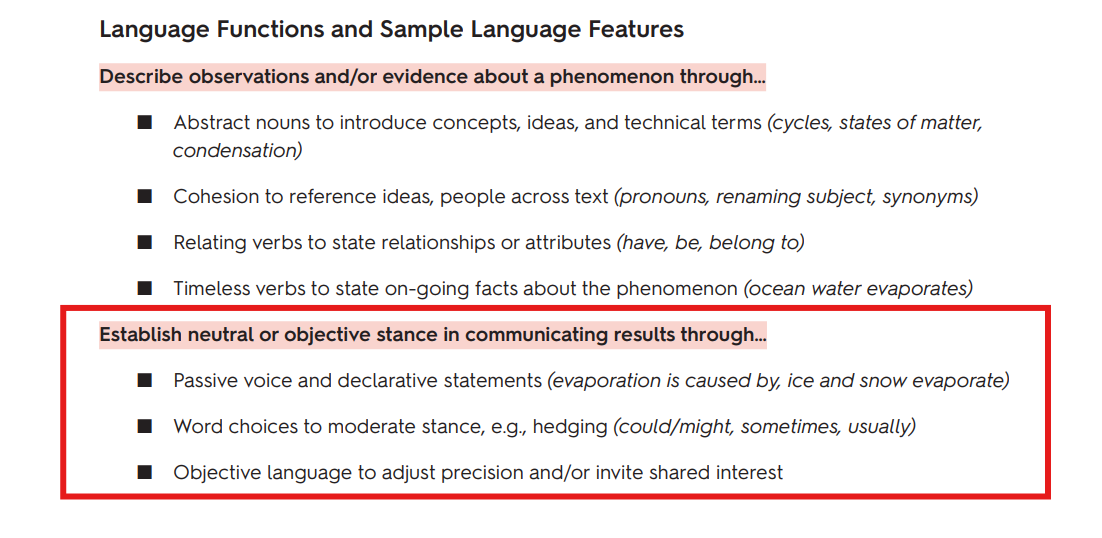
Now that we have settled on the language feature of passive voice to establish objective stance and to focus on the process, I need to add a few comments on this language feature. Typically, passive voice is taught as a structure to hide the agent and many ELA teachers tell their students to avoid it all costs. It is true that overuse of passive voice is a plague of academic writing. So, using it strategically is the goal of students’ metalinguistic awarness through questions like, how do I focus on the process because the who of the action is not important here? Another concern I’ve heard over the years is that some EL teachers are worried it may be too hard for EL students and often replace it with active voice. Students deserve to know why passive voice is important and what it does for them. And it definitely does way more for them than just hide agency. So, below, I describe a variety of functions passive voice does using an example of argumentation, and then provide a few sample activities for younger learners (grades 4) so that this blog can be more applicable to teachers who are looking for ways how to attend to disciplinary literacy in their content area classrooms. I intentionally wrote various examples to show applicability across genres and grade levels.
Strategic Role of Passive Voice in SFL
Shifting Focus to the Phenomenon: In sequential explanations, passive voice is used to prioritize the process over the people performing the actions, reinforcing an process-focused content.
Example:
“Plastic bottles are collected, sorted, and melted to create new materials.”
(instead of “Workers collect, sort, and melt plastic bottles to create new materials.”)
By using passive voice, the focus remains on what happens to the plastic rather than who is doing the recycling, emphasizing the phenomenon of recycling rather than individual actions.
In disciplinary learning, explicitly teaching when and why to use passive voice can help multilingual learners strengthen their academic writing by aligning their language choices with the conventions of the disciplinary genres.
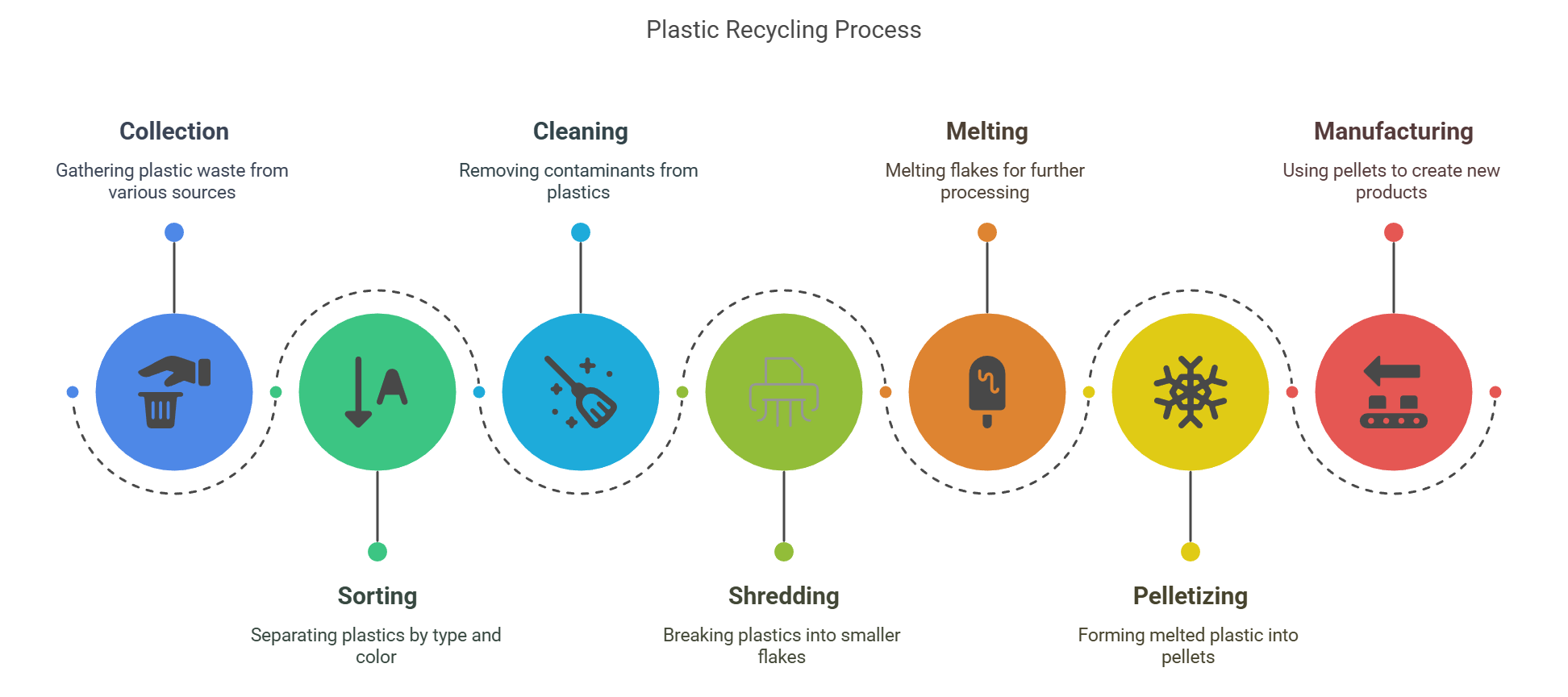
Table below illustrates passive voice use in different genres and their functions. I would highly recommend doing a focused scavenger hunt with students to identify passive voice and discuss its function. What does it DO in the text? For a critical reading of what passive and active voice does in historical texts, read my blog Slaves or Workers: Grammatical Choices and Moral Choices.
| Genre | Example of Passive Voice | Purpose of Passive Voice |
| Science Explanation (part of Lab Report) | The hypothesis was tested using a controlled experiment. | Emphasizes the process or results rather than the researcher. |
| Historical Account | The treaty was signed in 1919, marking the end of the war. | Highlights events and outcomes rather than individual actions. |
| News Reporting (Recount) | A new policy was announced by the mayor. | Creates an objective tone by focusing on the event. |
| Literary Analysis | The theme of isolation is explored throughout the novel. | Emphasizes interpretation rather than the author’s actions. |
| Legal Writing | The contract was reviewed by both parties. | Maintains a formal and neutral tone. |
| Argument | Several theories have been proposed to explain this phenomenon. | Makes writing more objective by avoiding personal pronouns. |
| Mystery/Crime Writing | The evidence was discovered hidden under the floorboards. | Creates suspense by delaying the revelation of the doer. |
| Persuasive Writing | The importance of renewable energy has been widely recognized by experts. | Strengthens arguments by emphasizing general acceptance. |
Student-ready Activities Around a Sample Text:
Plastic bottles are collected from homes and businesses. Then, they are sorted by type and cleaned before being shredded into small pieces. These pieces are melted and reshaped into new plastic items. Finally, the recycled plastic is used to create new products, reducing waste.
Activity 1: Why is Passive Voice Used? (Guided Inquiry)
✅ Objective: Students analyze why passive voice is used in scientific and environmental texts.
🔹 Instructions:
- Ask students: Why doesn’t the text mention who collects and sorts the plastic?
- Discuss:
- Passive voice keeps the focus on the recycling process itself rather than on the workers.
- In scientific and environmental writing, passive voice is used to describe natural and industrial processes.
Activity 2: Write a Recycling Process Report Using Passive Voice
✅ Objective: Students practice using passive voice in their own writing.
🔹 Instructions:
- Students choose an environmental process (e.g., how aluminum cans are recycled, how composting works).
- They write a short explanation using passive voice (e.g., “The cans are collected and crushed before being melted.”)
- Peer Review: Have students swap papers and identify where passive voice is used in their partner’s writing.
Activity 3: Sequencing Passive Voice Sentences
✅ Objective: Students recognize how passive voice creates a clear, logical sequence in process descriptions.
🔹 Instructions:
- Give students cut-out sentence strips from the sample text (e.g., “Plastic bottles are sorted by type.” / “They are cleaned before being shredded.”).
- Have students arrange the steps in the correct order to show the process of recycling.
- Discuss:
- How does passive voice help make the process clear?
- Would the meaning change if the sentences were in active voice?
At your service,
Ruslana





 Making Language Visible
Leave a comment