The last couple of months people in the Northern Hemisphere have been enjoying a rare sighting of the Aurora Borealis in almost every country and every U.S. state including, Texas, Alabama, and Florida. I finally got a chance to see them last night in Wisconsin and the show was indeed spectacular. The awe never really wore off, and the image stayed with me into the morning when I started reading about the science of the Northern Lights. The next day my Facebook feed was flooded with my friends’ pictures from Florida to Minnesota and to Ukraine who were sharing their images of this spectacular sight. Because I always reflect on language, I started thinking how beautiful not only the experience of seeing the Northern Lights, photos reshared everywhere, but also the language of the Northern Lights.
First, a disclaimer: this blog is not about how to teach the science of aurora borealis. We need to collaborate with our science teachers to support our language work meaningfully. And they need our language expertise to teach the language of science visibly. I am only talking about a few genres that students could create to process this beautiful phenomenon.
Second, there is no such thing as a monolithic language of the Northern Lights because language use depends on many variables but the key ones are audience and purpose. In this blog, I’ll touch on the purpose. Below I have posted several texts (generated by Chat GPT, except for the first one) that show how language to talk about the Northern Lights changes based on the purpose. Many people confuse purpose with format, so let’s get that cleared right away. Blogs, letters, posters, essays are formats. They don’t answer the question what’s the purpose. Blogs can persuade, inform, entertain, teach, explain etc. So, it’s important to be precise with students when teaching writing because formats are vague while genres are purposeful. You can use these texts to generate your ideas of how to write a variety of genres on one topic, in this case, the Northern Lights.
Text 1. A Personal Recount (Recounts Genre Family)
Last night, I stepped outside and looked up at the sky. It was dark, and I couldn’t see anything special. The Northern Lights, as reported by other friends who live in my town, were invisible to the naked eye. I started adjusting my camera settings because I know cameras are more sensitive and can capture more what a human eye can’t see. I took a few shots and I could see some color in the photos. Then I went inside to share my image with my husband and soon after, I decided to step outside again. Slowly, the stars seemed to fade, and ribbons of light appeared, dancing in the sky. The colors were like nothing I had ever seen—green, pink, and even hints of purple, moving as if the sky itself was alive. We stood there, frozen in awe, watching the Northern Lights as they swirled and shimmered. We took more pictures in an effort to contain this phenomenal show because it was hard to let it go as we were watching it disappear into the night sky.
Stages:
- Orientation: Sets the scene and provides background information.
- Record of Events: A sequence of events detailing what happened.
- Reorientation: Returning to the initial setting or situation, often with new insight.
- Coda (Optional): Offers a reflective comment or summary.
Text 2. Personal Reaction (Response Genre Family)
Wow! Incredible! Did you see that? No words! The Northern Lights are unlike anything I’ve ever seen. The way they move, how they glow—it’s just astonishing. You stand there, speechless, with no words to truly capture how breathtaking the experience is. Watching the sky light up in shades of green, pink, and blue feels unreal. It’s like the heavens are performing a masterpiece of light. You can’t help but feel small and amazed by the beauty and mystery of it all.
Stages:
- Reaction/Introduction: Expresses an immediate, emotional response to the experience.
- Description of the Experience: Describes the experience in more detail, emphasizing the emotional impact.
- Evaluation of the Experience: Reflects on the significance or impact of the experience.
- Conclusion or Final Reflection: Ends with a personal reflection or concluding thought.
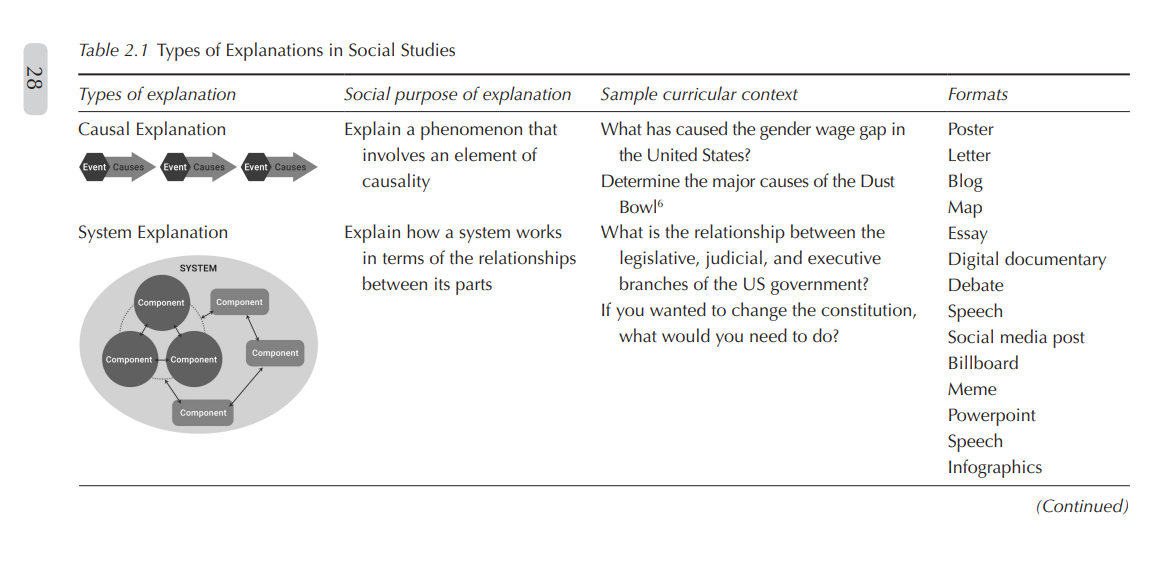
Text 3. What Makes Auroras Happen? (Causal Explanation of the Phenomenon)
Source of Text: Spaceplace.nasa.gov/aurora
Statement of the Phenomenon: Even though auroras are best seen at night, they are actually caused by the Sun.
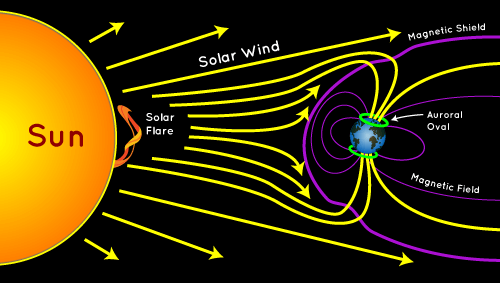
Explanation Sequence: The Sun sends us more than heat and light; it sends lots of other energy and small particles our way. The protective magnetic field around Earth shields us from most of the energy and particles, and we don’t even notice them.
But the Sun doesn’t send the same amount of energy all the time. There is a constant streaming solar wind and there are also solar storms. During one kind of solar storm called a coronal mass ejection, the Sun burps out a huge bubble of electrified gas that can travel through space at high speeds.
When a solar storm comes toward us, some of the energy and small particles can travel down the magnetic field lines at the north and south poles into Earth’s atmosphere. There, the particles interact with gases in our atmosphere resulting in beautiful displays of light in the sky. Oxygen gives off green and red light. Nitrogen glows blue and purple.
Stages:
- Phenomenon Identification: Introduces the phenomenon to be explained.
- Explanation Sequence: Explains the cause-and-effect processes behind the phenomenon.
Text 4. Explanation of Where Colors Occur (Causal Explanation)
The infographic below was found on MPR site (link below by the text). This graphic is a fantastic text to use to teach students to understand how colors are created. To explain that, students will need to learn the language of causal explanations. You don’t need to use an entire textbook page to teach language in the service of learning. Kids could geek out over this for hours if you add video as another text to experience.
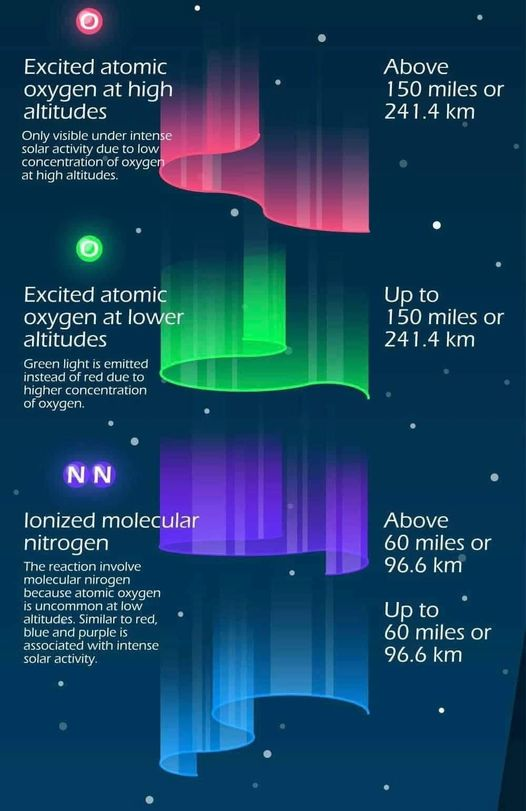
Edited: Source of Graphic and Text below https://www.mprnews.org/story/2024/10/11/understanding-aurora-colors-the-science-behind-the-display
Phenomenon Identification: The colors in the Auroras are caused by oxygen and nitrogen molecules interacting with the atmosphere.
Green: The most common color, produced by excited oxygen molecules at altitudes up to 150 miles. Green is the color most frequently seen because our eyes are most sensitive to that wavelength.
Red: Less frequent, this color forms at higher altitudes (above 150 miles) when oxygen emits light in a higher energy state. A lot of reds can be observed during intense solar flares.
Blue: Created by interactions with nitrogen at lower altitudes (below 60 miles), giving a vivid blue hue. Blue aurora’s are more rare than red and green and typically seen around sunset or sunrise.
Purple/Pink: These colors result from both nitrogen and oxygen, often appearing when conditions allow for multiple gas interactions.
Stages:
- Phenomenon Identification: Introduces the phenomenon to be explained.
- Explanation Sequence: Explains the cause-and-effect processes behind the phenomenon.
Text 5. Why the name “Aurora Borealis”? (Historical Account Genre)
The term “Aurora Borealis” comes from the Roman goddess of the dawn, Aurora, and the Greek name for the north wind, Boreas. The name was first coined by the Italian scientist Galileo Galilei in 1619. He chose “Aurora” because the lights often appeared at dawn or dusk, and “Borealis” to refer to the fact that these lights were seen in the northern hemisphere. The combination of these terms creates the name we still use today to describe the stunning natural phenomenon of the Northern Lights.
Stages:
- Introduction of the Term/Phenomenon: Introduces the term and its components.
- Historical Context: Provides historical background about when and by whom the term was coined and explains the reasoning behind the choice of the term.
- Conclusion/Current Relevance: Connects the historical origin to the present-day usage of the term.
Key Differences in Genre Stages:
- Text 1 (Personal Recount) focuses on a chronological sequence of events and ends with a reflective comment, typical of recounts.
- Text 2 (Personal Reaction) emphasizes emotional response and uses figurative language and personal reflection to express the speaker’s feelings.
- Text 3 and 4 (Scientific Explanation) is structured around cause-and-effect and scientific reasoning, providing factual information and a logical sequence of explanation.
- Text 5 (Historical Account) is structured around the historical context of the term, providing a brief historical account of the etymology of the phrase.
(Some) Key Language Features
First, I could not contain my excitement from learning that the everyday word “excited” has a speciliazed meaning in the context of science (Figure 2). It’s not so much that the words are polysemous, it’s that words have specialized meanings in the context of their discipline.
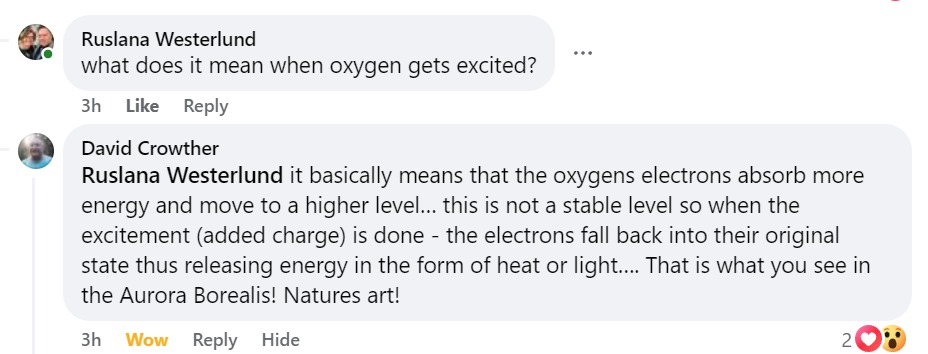
Table 1. Contrasting Language Features in the Genres, Focusing on Noun Groups and Verb Groups
| Genre | Key Language Features: Noun Groups + Verbs |
|---|---|
| 1. Story (Narrative) To tell a personal, engaging story | Noun Groups: ribbons of light, the sky itself, a cosmic show, a moment of awe Verbs: appeared danced, swirled, shimmered |
| 2. Personal Reaction To share a personal reaction to an experience | Noun Groups: astonishing Northern Lights shades of green, pink, and blue, a masterpiece of light, the beauty and mystery of the Northern Lights Verbs: glow, move, feel, amazed |
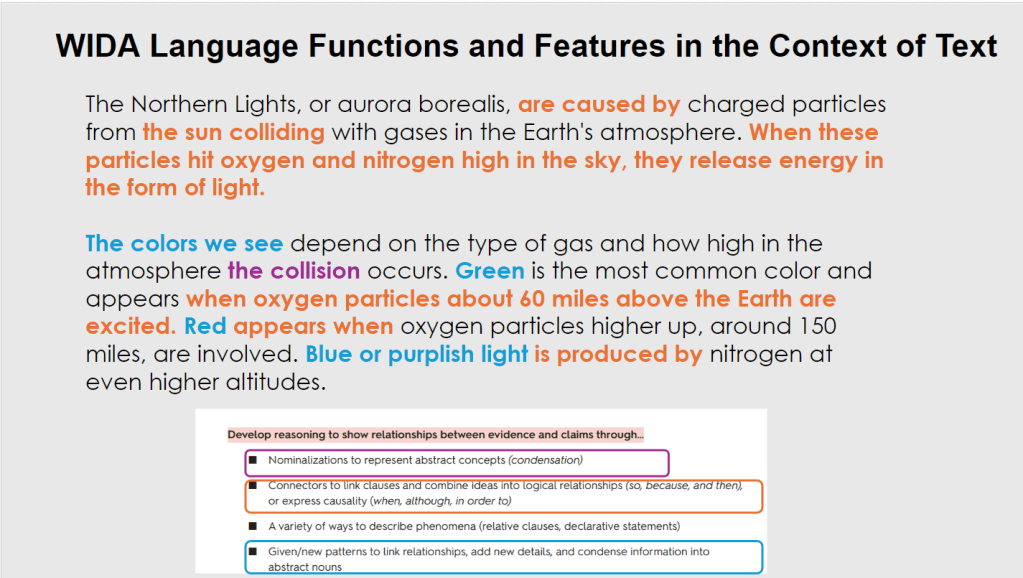
| 3. Causal Explanation To explain the how of the scientific process behind auroras | Noun Groups: charged particles, the Earth’s atmosphere, oxygen and nitrogen particles, green light, red light, bluish or purplish light Verbs: collide, release, produce, react |
| 4. Causal Explanation (Multimodal) To explain the occurrence of aurora colors at different altitudes | Noun Groups: excited atomic oxygen oxygen particles about 60 miles above the Earth oxygen particles around 150 miles up bluish or purple light, nitrogen reactions Verbs: emit, occur, appear, collide |
| 5. Historical Account To explain the origin of the name | Noun Groups: the Roman goddess of dawn, Aurora, the Greek god of the north wind, Boreas, a stunning natural phenomenon, the Northern Lights Verbs: come, chose, refer, name |
A Few Ideas for Your Classroom
- You can build a whole thematic unit around the genres of the Northern Lights, not just the topic, but the genres as illustrated above but many more!
- Bring multimodal genres. There are tons of graphic representations of the causal explanations of auroras. The best ones are by NASA.
- Just because students can describe the beauty of the auroras, that doesn’t mean they are ready to explain what causes them and how colors are produced. Move along the mode continuum from a personal recount of seeing auroras to engaging in sense making about what might be causing them to a causal explanation through videos, discussions, reading of infographics, and children’s books!
- Allow students to use everyday language to describe the complex process. Everyday language is perfect for sense making.
- Move towards specialized language to help students develop “expert voice”. See table above for some key verbs and noun groups for specific genres. They will also need to learn the adverbials of place to give details about the altitude if they are explaining how the colors are produced.
- Let students cut up sentences with causality to show how When clauses communicate causality (as in a causal explanation) or due to (infographic). Divide them up and put them together. See blog on Moving Beyond Because and So: The Language of Causality.
- Contrast the language of personal reactions with the language of causal explanations. Show the overlap and the specialized language of science. Get excited about the word “excited” as in “excited oxygen particles”.
- Children can learn about complex science phenomenon from picture books. Bring in children’s books and read picture books about Auroras. Comment below if you have some of your favorites. Here’s one to get us going.
- Explore how different cultures view the Northern Lights, from the Cree people of North America to the Sami people of Scandinavia. Here’s a great start https://www.theaurorazone.com/about-the-aurora/aurora-legends/
Children’s Books on Aurora:
Aurora: A Tale of the Northern Lights by Mindy Dwyer https://a.co/d/ix1Z9jN
Rory: An Orca’s Quest For The Northern Lights by Sarah Cullen, Carmen Ellis, Zuzana Svobodova https://a.co/d/dB4hbLJ
The Lights That Dance in the Night Hardcover by Yuval Zommer https://a.co/d/1S1SxEW
Free resources for teaching about the Northern Lights: https://www.anoffgridlife.com/wp-content/uploads/Free-Online-Northern-Lights-Resources-for-Kids.pdf
At your service,
Ruslana



 Making Language Visible
Leave a comment