-
Continue reading →: From Speaking to Writing in a Science Classroom
By Katy J. Kobany Cumulative Project for EDUC 731: Responsive Pedagogy for ELLs, Bethel University, Teacher: Dr. Ruslana Westerlund Academic standards 8323: Water, which covers the majority of the Earth’s surface, circulates through the crust, oceans and atmosphere in what is known as the water cycle. Essential question(s) Where is water…
-
Continue reading →: What Does Language Do in History?
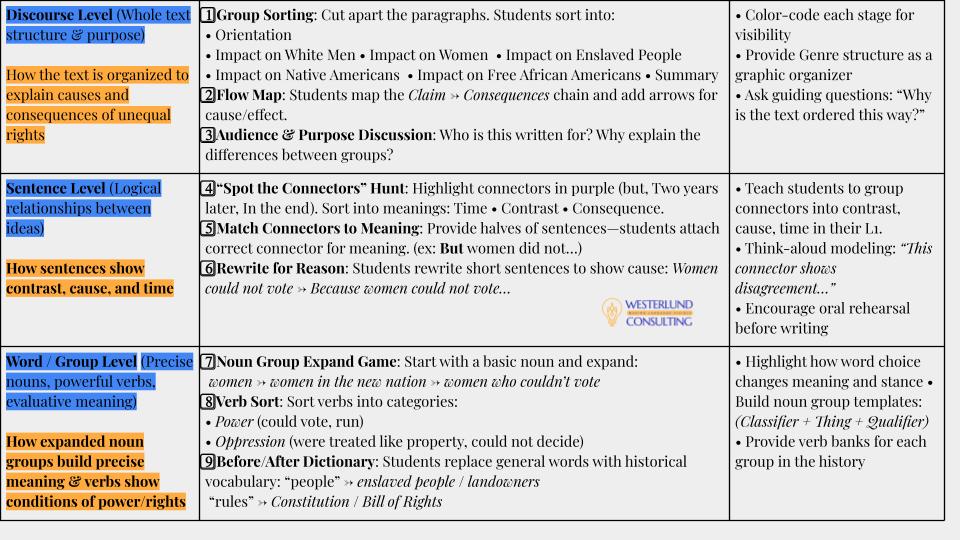
By Ruslana Westerlund History is often studied as facts, events or lives of historical figures. We study history to understand the past or even predict the future. If we want to build democratic classrooms, history needs to be problematized. This is not a new idea. We ask students to answer questions such…
-
Continue reading →: SFL: A Living Theory of the Living Language
By Ruslana Westerlund, a self-taught SFL Learner. For the past 3 years, I’ve been learning about Systemic Functional Linguistics. I was drawn to this theory because it offered a refreshing description of language as a dynamic resource for making meaning as opposed to a set of rules prescribed by a…
-
Continue reading →: Bad Hombres, Baskets of Deplorables and the Everyday Language of White Racism
Originally posted on The Educational Linguist: During this week’s presidential debate my social media exploded with commentary about Donald Trump’s use of the term “bad hombres.” Many linguistics immediately saw this as an example of Mock Spanish, most notably developed in Jane Hill’s book The Everyday Language of White Racism.…
-
Continue reading →: Language Ideology
Source: Bernsand, N. (2001). Surzhyk and National Identity in Ukrainian Nationalist Language Ideology. Berliner Osteuropa Info. Forum. Retrieved from: http://www.oei.fu-berlin.de/media/publikationen/boi/boi_17/11_bernsand.pdf
-
Continue reading →: Language is for the living of life, not for the production of structures (Hasan, 2008/2011)
Source: Hasan, R. (2008/2011). Modes of learning, modes of teaching: semiotic mediation and knowledge. Language and education: Learning and teaching in society. Volume 3. ed. J Webster. London: Equinox. Chapter 2.
-
Continue reading →: Will English learner relicensure policy actually improve professional development in Minnesota districts?
By Miranda Schornack, a doctoral student in Second Language Education at the University of Minnesota-Twin Cities. The bright side In 2014, the Minnesota Legislature enacted requirements for educator relicensure that focus on professional growth around working with English learners (ELs) (MN§122A.18, Subd. 4(b)) (also, see Appendix A). These new requirements are…
-
Continue reading →: Much more than a reclassification issue: ELLs in K-12
by Ruslana Westerlund, Ed. D., WIDA at Wisconsin Center for Education Research and Luciana C. de Oliveira, Ph.D., University of Miami Much more than a reclassification issue: ELLs in K-12: A Response to Keeping long-term English learners from getting stuck This blog post is in response to the original blog Keeping…
-
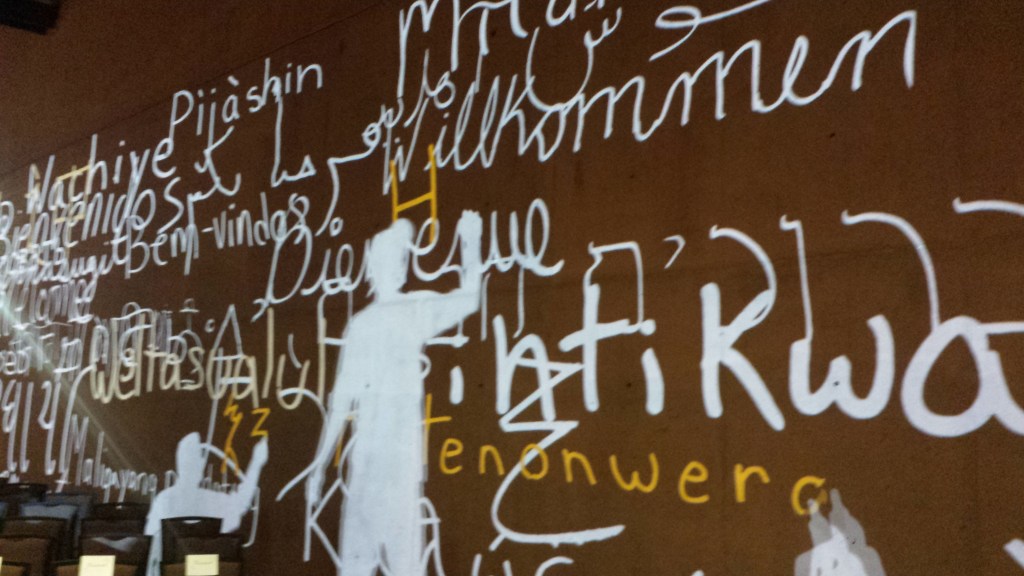 Continue reading →: “Aren’t some students too young to talk about critical issues?”
by Jenna Cushing-Leubner & Alexa LaPatka “Aren’t some students too young to talk about critical issues?” This is a question that is often asked – by colleagues, by teacher-students in my graduate classes, by my family and friends back home who are not educational researchers, but are very interested in the…
-
Continue reading →: 2015 in review
Thank you dear readers for your interest and engagement with the Reclaiming the Language for Social Justice blog in the first year of its existence. WordPress.com stats helper monkeys prepared a 2015 annual report for my blog. Check it. You might be highlighted below. Here’s an excerpt: The concert hall…
Hello,
I’m Ruslana

Welcome to my blog where I share my ruminations on education, equity, language, and language-based pedagogy, namely Systemic Functional Linguistics.
Let’s connect
Join the fun!
Stay updated with our latest tutorials and ideas by joining our newsletter.
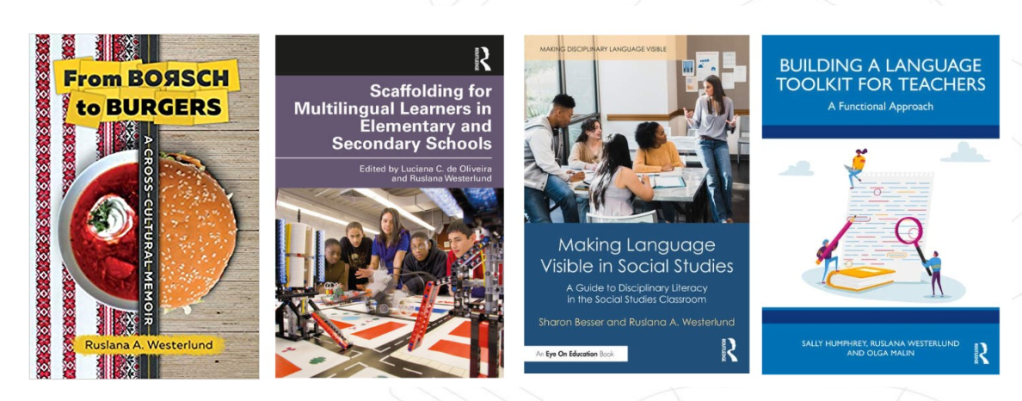

 Making Language Visible