-
 Continue reading →: Condensing Meanings Through Nominalization
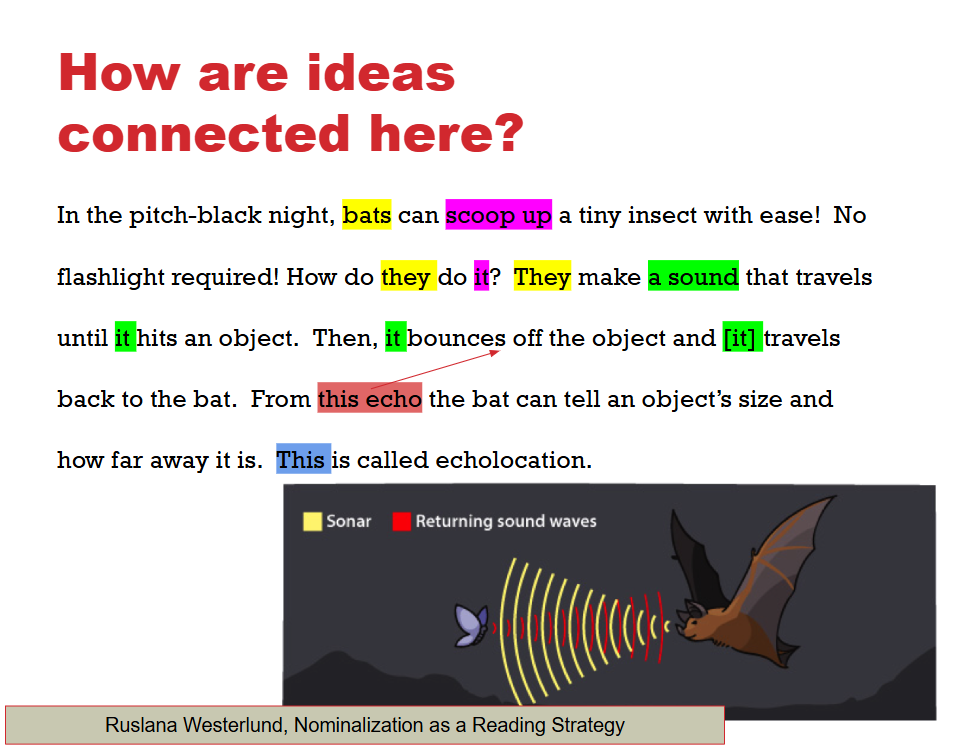
Let’s talk nominalization in the WIDA ELD Standards. Did you know that in earlier grades nominalization is just vocabulary words students use like evaporation, multiplication, revolution? However, starting in grade 5, students should be explicitly taught how to create more dense writing by nominalizing adjectives, clauses, and verbs? To find…
-
 Continue reading →: “Opening and Closing Doors for Other Voices”: Teaching the Language of Rebuttals
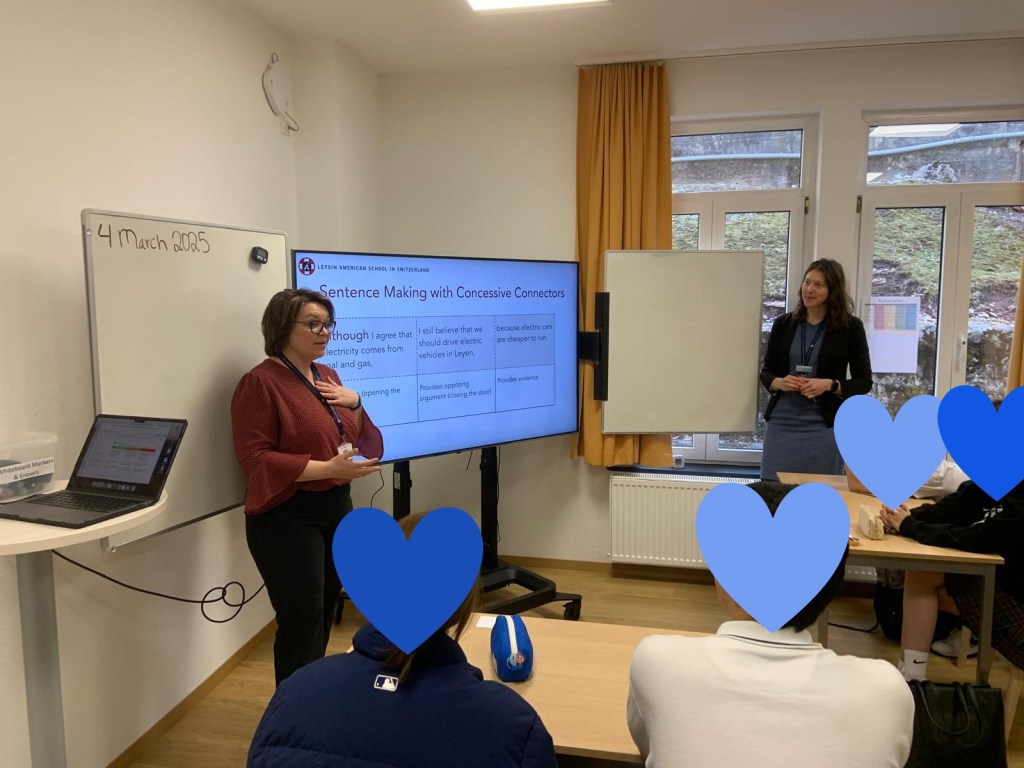
In March 2025, I had an opportunity to visit Switzerland as a Visiting Scholar in Leysin American School. I worked with Mari McCarville, a phenomenal teacher who teaches English as an Additional Language (EAL) students who speak a variety of languages (Romanian, Spanish, French, Chinese, Korean and others) with language…
-
 Continue reading →: Choosing a Language Focus (Example: Passive Voice)
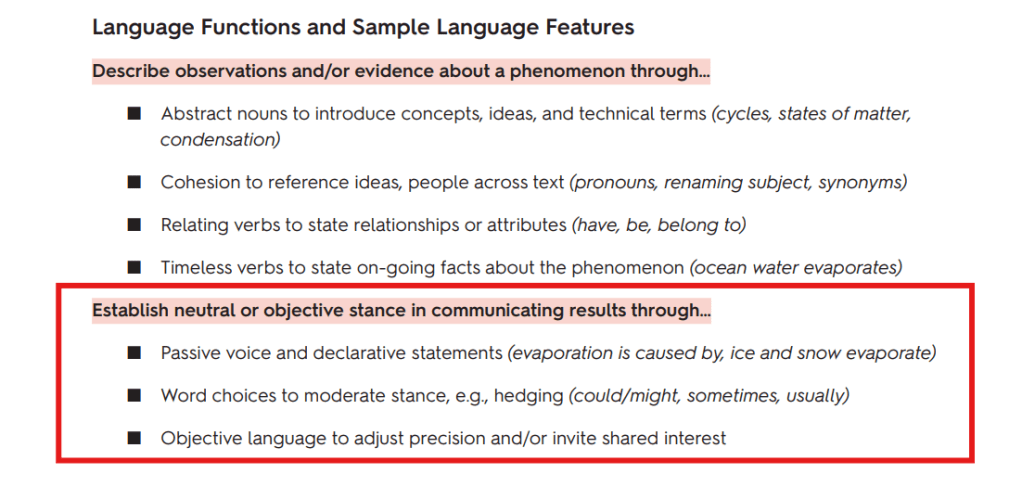
By Dr. Ruslana Westerlund Teachers often ask me questions which language feature to focus on. This question comes from feeling overwhelmed with the student needs and all the options of the language features provided in the WIDA ELD Standards. My response is informed by the following steps: Plastic bottles are…
-
Continue reading →: Strategic Translanguaging in Narratives: Bringing Our Cultural Worlds into Writing
When I was writing my memoir “From Borsch to Burgers: A Cross-Cultural Memoir”, I used Ukrainian words intentionally and purposefully. It was a strategy I used to connect with the words of my childhood. My childhood did not happen in English. It happened in Ukrainian. Therefore, the book, though written…
-
Continue reading →: Tools for Building the Inner and Outer Worlds of Characters through Actions, Reactions, Interactions, and Descriptions
What I’m about to teach you I learned from Sally Humphrey. I had an opportunity to travel to Sydney in 2016 or 2018, and I’ll never forget our chat in a corner coffee shop where she taught me how to make a complication more complicated (more interesting) by adding phases…
-
 Continue reading →: Finding the Language of Perspective in Children’s Books
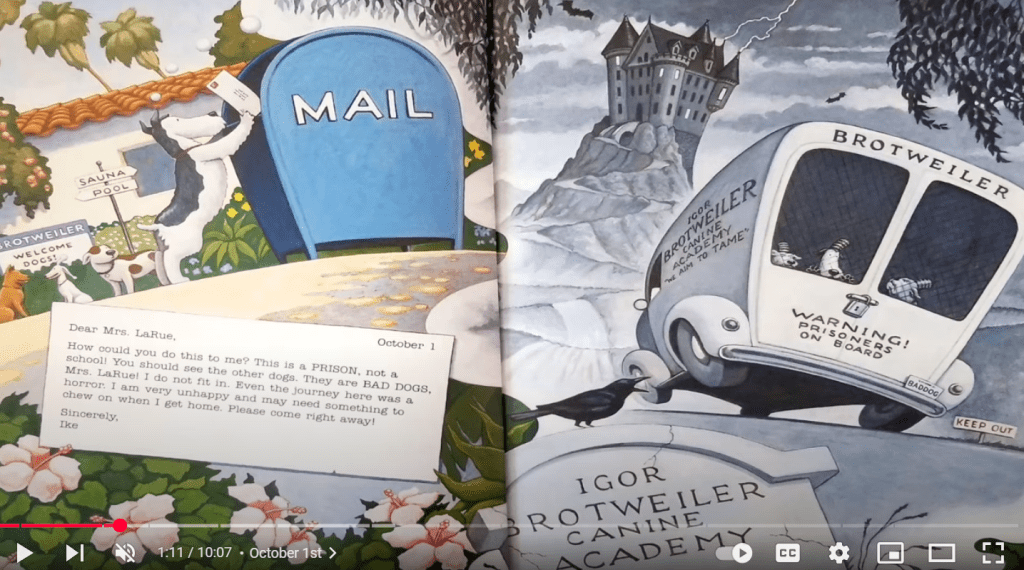
Typically, I write blogs in response to a teacher question, this time, I wrote a blog in response to my own question: what exactly is the language of perspectives? Which system in Systemic Functional Linguistics is the most useful to help us detangle the language of our opinions, feelings, and…
-
Continue reading →: Character Development Through “Saying” Verbs
Today a teacher reached out to me with a question about an entry point into language features in narratives. I asked her what goals she had for her lesson which was to develop character interactions. In this short blog, I’ll answer her question as well as provide some background on…
-
Continue reading →: Your Favorite Making Language Visible Blogs of 2024
2024 was the year of blogging. All these blogs were inspired by you, my teacher friends who requested simple and actionable illustrations of the Language Functions and Features in the WIDA 2020 Standards. Below I highlight a few of your favorite blogs. An Invitation to Reconsider Comprehensible Input My first…
-
 Continue reading →: Teaching Students to Find Definitions of Vocab in Texts
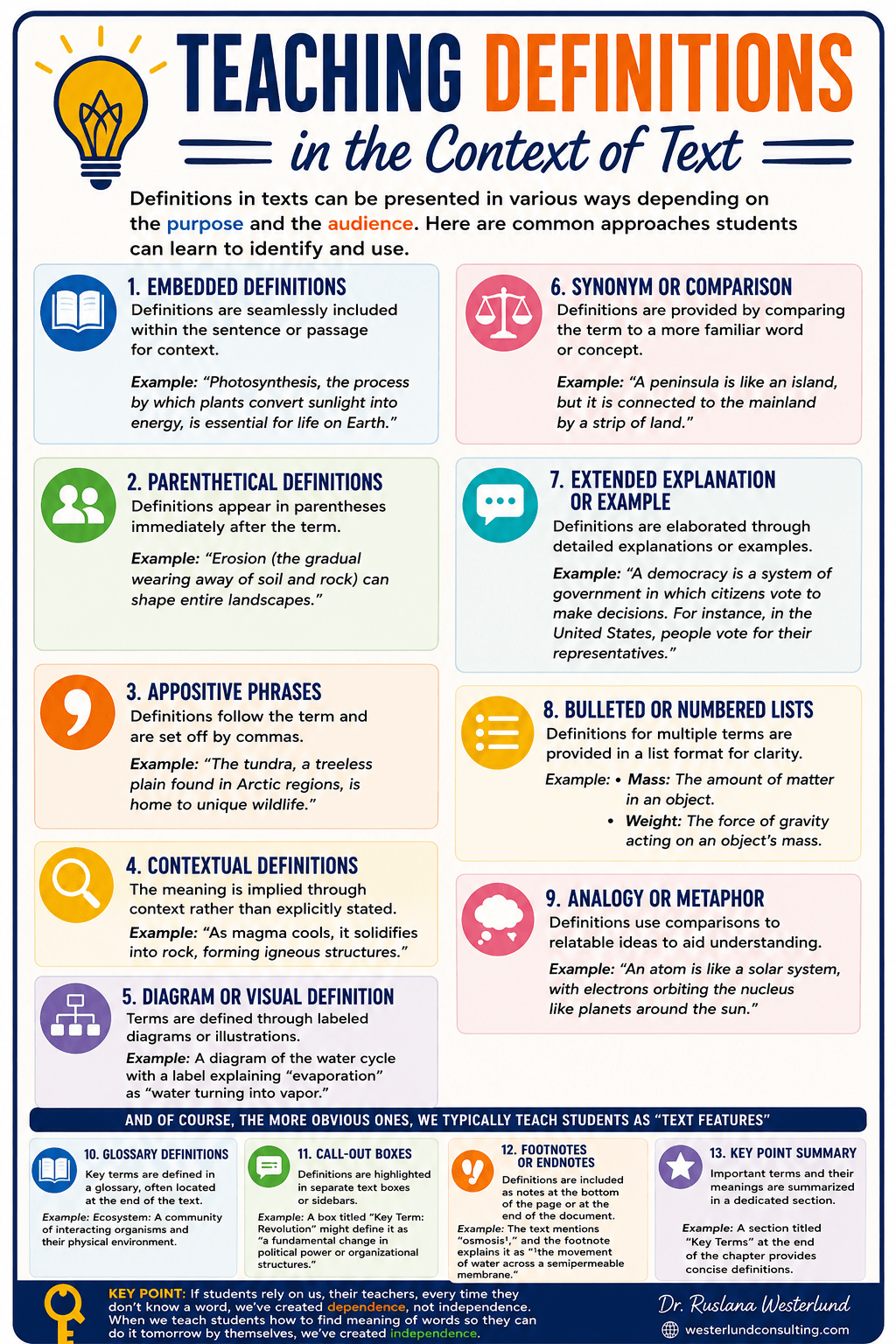
I’ve recently been reviewing research on teaching vocabulary and one research article I found talked about the dangers of pre-teaching vocabulary because it doesn’t lead to student agency (Ramos, 2015). (For a phenomenal synthesis of research on learning vocab incidentally or intentionally, please see Molle et al, 2021). However, I…
-
Continue reading →: I. Will. Persist…
“Because love is an act of courage, not of fear, love is a commitment to others. No matter where the oppressed are found, the act of love is commitment to their cause–the cause of liberation.”― Paulo Freire, Pedagogy of the Oppressed “To glorify democracy and to silence the people is a farce;…
Hello,
I’m Ruslana

Proud immigrant woman business owner of Making Language Visible @Westerlund Consulting. I consult internationally on all things related to equipping all teachers with a pedagogically useful model of language. Book me at westerlundconsulting.com
Let’s connect
Join the fun!
Stay updated with our latest tutorials and ideas by joining our newsletter.