We are having a fantastic time in our summer book study. There are about 70 participants from 6 continents. I lost track of counting countries, it’s easier to count continents.
Two theoretical chapters are out of the way – next week is the real fun begins. If you hurry, we might accept a few late stranglers. In chapter 1, we presented a model of language where we showed how context is realized through language at the genre and register levels. We talked about the field continuum, the tenor continuum, and the mode continuum, comprising the register continuum.
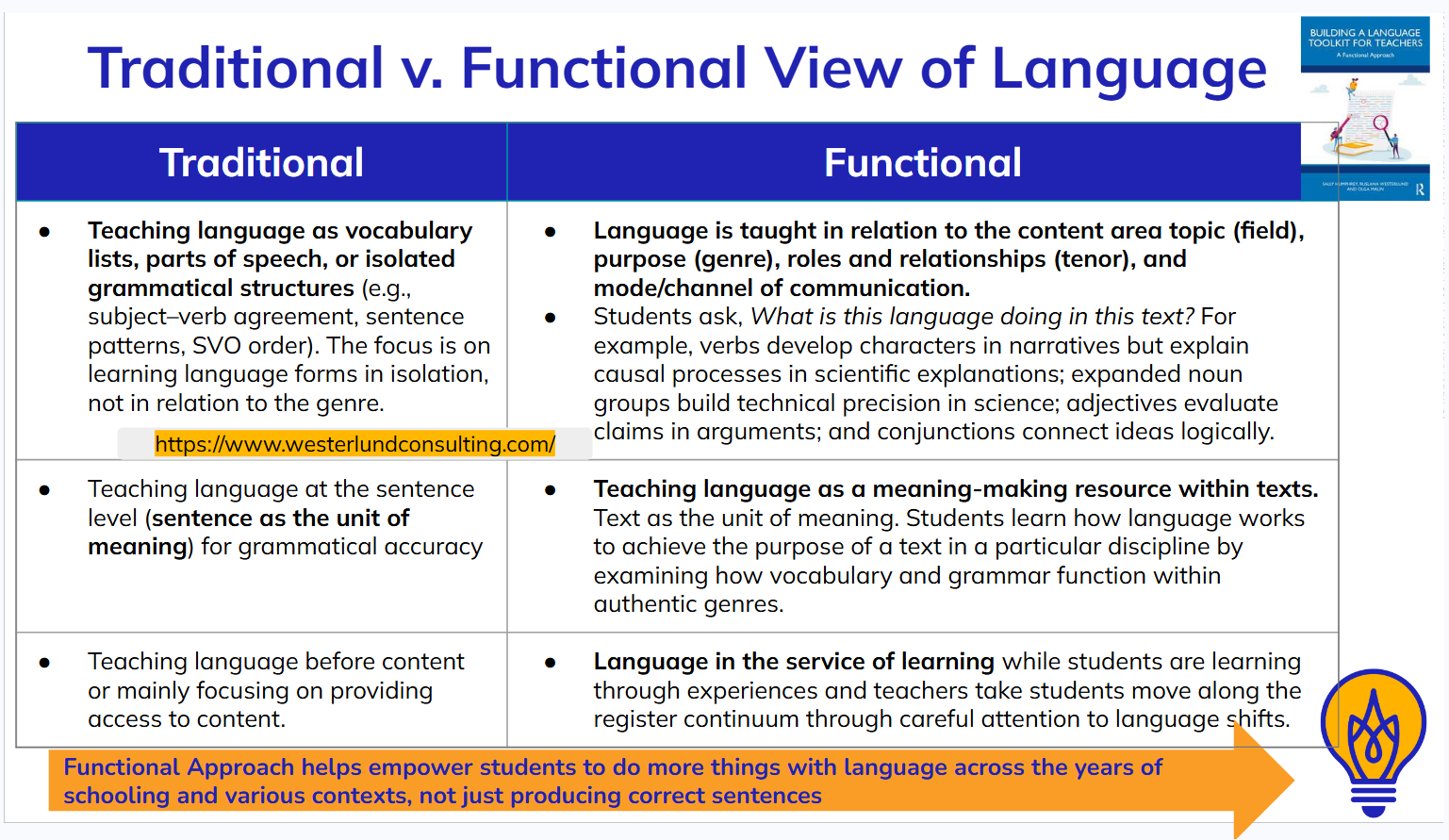
In chapter 2, we explored everyday, general, and specialized and technical language doing lots of important work in creating taxonomies, classifications, descriptions in disciplinary learning. The bottom line was that disciplinary learning is not carried only with technical and specialized.
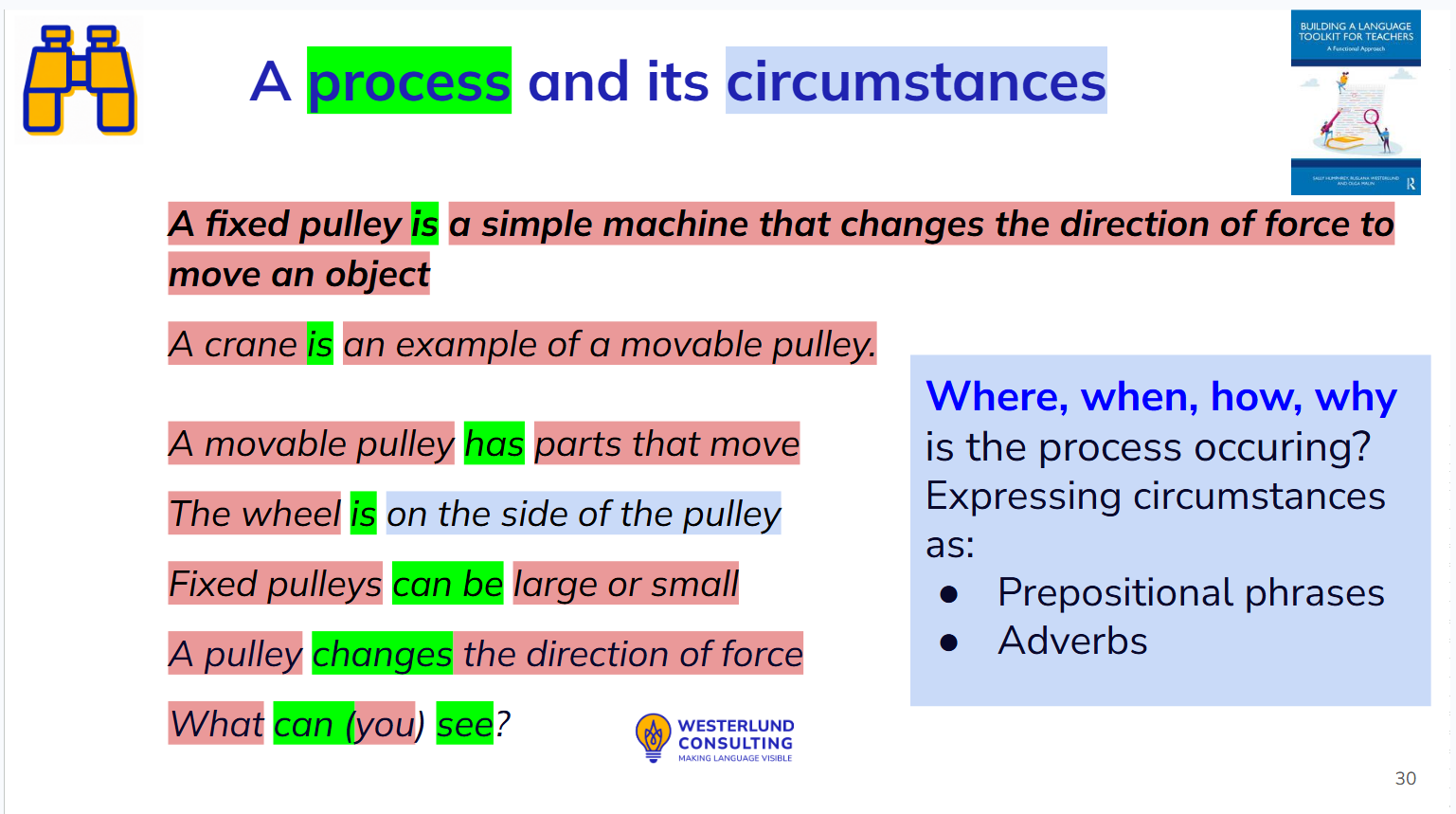
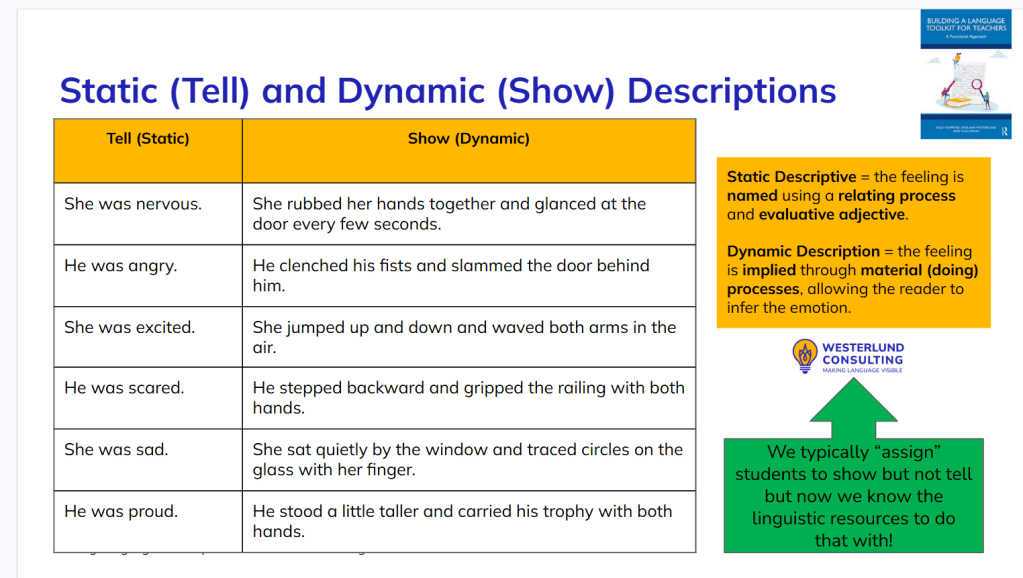
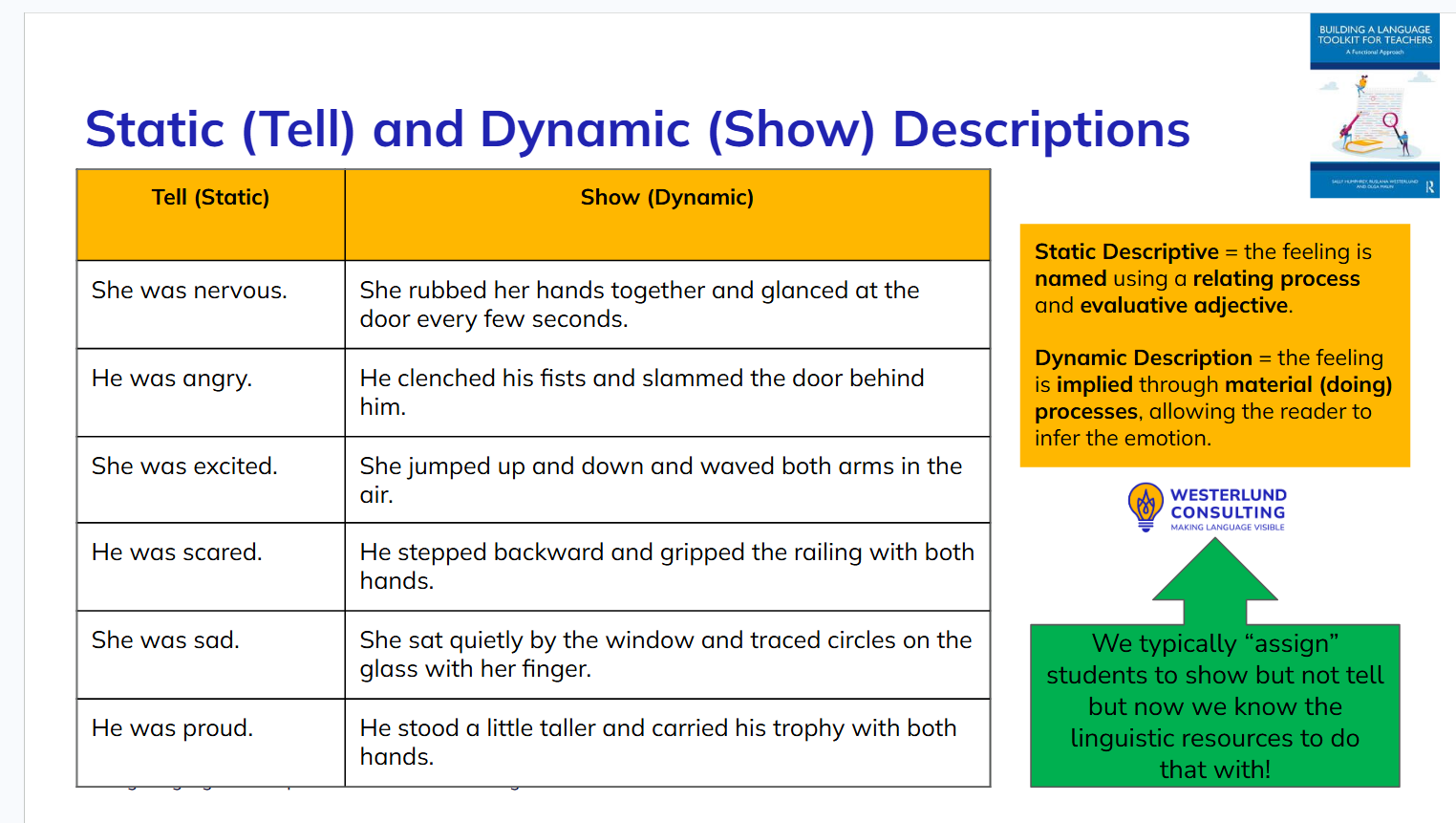
This takes us to session 3: where we’ll be exploring genres for disciplinary learning. We’ll live for a while in the Narrate genre family and explore language features beyond sequence words and adjectives. But we’ll be looking at how the social purpose of narratives is realized through stages and phases. All of that will be defined and illustrated through many texts. A place where we are going to hang out for a while will be on the stages and phases in narratives because teachers have found that while general stages of Orientation, Complication, and Resolution allow students to create a story arc, they are not enough: hence, Actions, Reactions, Interactions, and Descriptions. If you slow down and take a look at the Descriptions, you’ll see that there are different ways to describe characters’ feelings: static which teachers call Tell, and Dynamic = Show. The implication is that those things are typically assigned, not taught. In our book study, we show the linguistic resource that realize those. Join us, it’s not too late.
Cheering you on,
Dr. Ruslana Westerlund
P.S. If you want to sign up for the rest of the sessions, please email us at support@westerlundconsulting.com
If you can’t attend our summer sessions, you can still learn from our book.
About the Author
Dr. Ruslana Westerlund is an educational consultant, researcher, and professional learning facilitator specializing in disciplinary literacy, multilingual education, and Systemic Functional Linguistics (SFL). She works with schools, districts, universities, and educational organizations across the United States and internationally to support the implementation of high-quality instruction that integrates language, literacy, and disciplinary learning. Her work focuses on making language visible through the Teaching and Learning Cycle, the WIDA ELD Standards Framework (which she co-authored), and evidence-based approaches that provide multilingual learners with high challenge and high support.
Westerlund Consulting LLC is a certified Woman-Owned Business Enterprise (WBE) providing professional learning, curriculum design, instructional coaching, keynote presentations, and strategic consultation in disciplinary literacy, multilingual education, and language-focused instructional design. The company partners with educational organizations to build educator capacity and improve equitable access to rigorous, language-rich learning for all students.






Leave a Reply