This lesson is in response to a conversation on LinkedIn about Text as a Unit of Meaning. The question came up about whether we should work with texts with students with lower levels of language proficiency to which I responded: we can do complex work with short texts. I actually illustrated it with an example of teaching students how to read Headlines but this one was the actual text I used in my Professional Learning that I use when training Kinder teachers how teach students about the meaning of context (in this case MODE) when analyzing text humans use in the real world.
Exploring Language Through Field, Tenor, and Mode
Grade: Kindergarten
Time: 20–30 minutes
Purpose
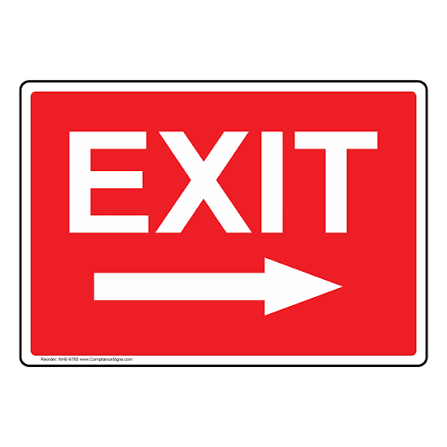
Students will discover that different texts use language differently depending on their purpose. They will learn that signs such as STOP, EXIT, and PUSH often use only one or two words because the situation requires people to understand the message quickly.
Content–Language Objective
Students will observe, describe, compare, and explain how the purpose and context of environmental print influence language choices. Through analyzing signs such as STOP, EXIT, and PUSH, students will explain why these texts use single words or short phrases rather than complete sentences to communicate meaning efficiently.
Materials
- STOP sign
- EXIT sign
- PUSH / PULL sign
- WALK / DON’T WALK pedestrian signs
Also prepare matching full-sentence versions:
- Please stop your car here.
- This is the exit.
- Please push the door.
- You may walk now.
Lesson
1. Notice and Wonder (5 minutes)
Display only the signs.
Ask:
- What do you notice?
- Which words can you read?
- Do these look like the books we read?
- Do you see any periods?
- Do they have many words?
Students quickly notice:
- only one word
- big letters
- easy to read
- no sentences
2. Compare (5 minutes)
Display:
STOP
next to
Please stop your vehicle before entering the intersection.
Ask:
Which would you rather read while driving?
Why?
Repeat with:
EXIT
vs.
This is the exit door.
Students begin noticing that signs must be read very quickly.
3. Functional Language Investigation (10 minutes)
Introduce the idea that language changes depending on what it has to do.
Field
What is happening?
These signs tell people what to do.
Examples:
- Stop
- Exit
- Push
- Pull
Tenor
Who is talking to whom?
Ask:
Who made this sign?
Who is reading it?
Students discover:
- school
- city
- store
- airport
The writer does not know the reader personally.
Mode
How is the message communicated?
Ask:
Why doesn’t the sign say
“Please stop your car before entering the intersection.”
Students discuss.
Guide toward:
Because…
- people need to read quickly
- drivers don’t have time
- too many words take too long
- one word is enough
Teacher summarizes:
Different texts use different kinds of language. Signs are designed to communicate important information as quickly as possible.
4. Sort Activity (5 minutes)
Students sort cards into two groups.
Signs
STOP
EXIT
PUSH
PULL
Sentences
Please stop your car.
This is the exit.
Please push the door.
You may enter here.
Students explain why each belongs in its category.
5. Application
Students design their own classroom sign.
Examples:
LIBRARY
QUIET
WASH HANDS
LINE UP
RECYCLE
Then explain:
“I only used one word because people need to understand it quickly.”
Teacher Debrief (For Professional Learning)
Although this lesson appears simple, students are developing an understanding of register—one of the foundational concepts of Systemic Functional Linguistics.
Rather than teaching grammar as isolated rules (e.g., “A sentence needs a subject and a verb.”), students learn that language choices depend on purpose. They discover that texts are designed differently because they serve different social functions.
Through this investigation, students begin to understand:
- Field: What is the text about? (Giving directions or information.)
- Tenor: Who is communicating with whom? (A public authority communicating with many unknown readers.)
- Mode: How is the message communicated? (Brief, highly visible, and immediate.)
This lesson lays the groundwork for later understanding that scientific reports, stories, news headlines, recipes, diagrams, and persuasive texts also make different language choices because they have different purposes. Even our youngest learners can begin asking one of the most powerful disciplinary literacy questions:
Why did the author choose to write it this way?
Instead of seeing language as a fixed set of rules, students begin to see it as a flexible resource for making meaning in different contexts. This is the foundation of functional language awareness and prepares them to become thoughtful readers and writers across disciplines.
About the Author
Dr. Ruslana Westerlund is an educational consultant, researcher, and professional learning facilitator specializing in disciplinary literacy, multilingual education, and Systemic Functional Linguistics (SFL). She works with schools, districts, universities, and educational organizations across the United States and internationally to support the implementation of high-quality instruction that integrates language, literacy, and disciplinary learning. Her work focuses on making language visible through the Teaching and Learning Cycle, the WIDA ELD Standards Framework (which she co-authored), and evidence-based approaches that provide multilingual learners with high challenge and high support.
Westerlund Consulting LLC is a certified Woman-Owned Business Enterprise (WBE) providing professional learning, curriculum design, instructional coaching, keynote presentations, and strategic consultation in disciplinary literacy, multilingual education, and language-focused instructional design. The company partners with educational organizations to build educator capacity and improve equitable access to rigorous, language-rich learning for all students.



 Making Language Visible
Leave a comment